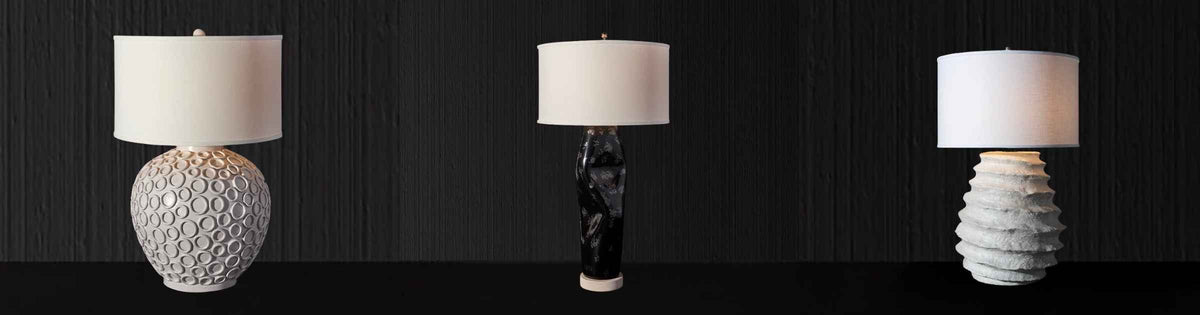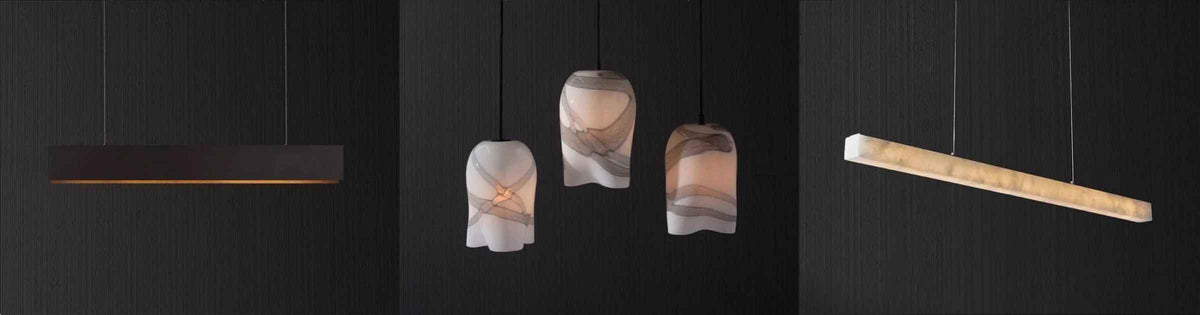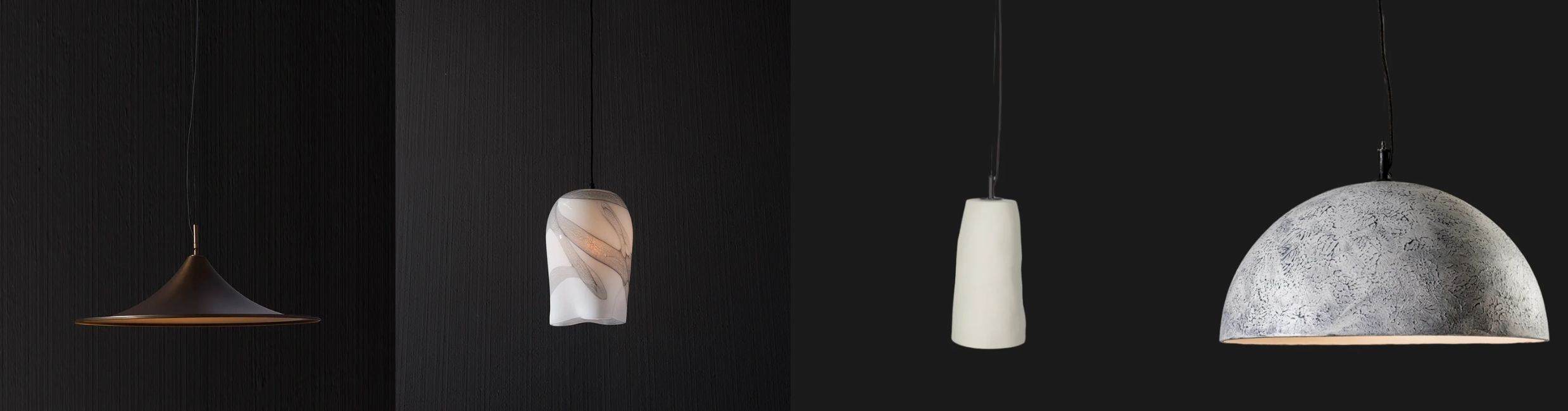
2026 Kitchen Pendant Light Trends Homeowners Are Choosing
A pendant used to be a simple decision. Pick a shape you liked, hang it over the island, done. That's not how it works anymore. Kitchens have turned into the most photographed room in the house, the one everyone actually gathers in, and the lighting has had to catch up.
A pendant now has to set a mood, define a work zone, and hold its own as a design statement, sometimes all three at once. That's what's driving the latest kitchen pendant light trends.
The 2026 kitchen pendant light trends boil down to sculptural silhouettes, warm diffused light, and natural or luxury materials like ceramic and alabaster. Pendants get placed intentionally over islands, sinks, and prep zones, as part of a bigger lighting plan rather than the kitchen's only light source.
Today, we’ll cover the pendant styles and materials defining 2026, how to pick the right size and placement for your island, what works over the sink and around the rest of the kitchen, and a few dated habits to skip.
Key takeaways:
-
Pendants are still a defining feature of 2026 kitchens, but are no longer expected to light the whole room by themselves.
-
A single sculptural piece, in ceramic, alabaster, crystal, or textured glass, is replacing rows of matching, uniform fixtures.
-
Recessed or flush lighting, under-cabinet lighting, and dimmers now share the load pendants used to carry alone.
-
Height, spacing, and scale get planned around the island or sink, rather than chosen for looks alone.
-
Harsh glare, identical clear-glass rows, and single-fixture kitchens are the habits fading out.
What Are the Biggest 2026 Kitchen Pendant Light Trends?

The biggest 2026 kitchen pendant light trends are sculptural shapes, tactile materials like ceramic and alabaster, and warmer, more diffused light, replacing the uniform, matched fixtures that used to be standard.
Showroom floors show it clearly: single sculptural pieces and clustered organic shapes have taken over from rows of matching glass globes, and 87% of kitchen industry professionals say kitchens have become spaces built for decorative, statement lighting.
What's changed is how pendants are being designed and used, moving toward one-of-a-kind shapes, tactile materials, and warmer light instead of matching rows, plain clear glass, and harsh output.
Sculptural Shapes Are the Biggest Single Shift
Sculptural pendants have become the default choice for islands. Open almost any newly designed kitchen right now and you'll find one bold, oversized shape hanging over the island instead of a row of matching lights.
The reason is simple: one striking fixture gives the eye something to focus on. A rounded, cloud-like shape or a small cluster of crystal pieces works because it reads as one intentional choice, not three identical ones. That matters most in open kitchens, where the island is in full view from the living room or dining area.
Materials and Light Are Following the Same Idea
That same move toward one-of-a-kind pieces shows up in materials, too.
Kitchens are full of hard surfaces, like stone counters, tile, and metal appliances. So, ceramic, alabaster, and textured glass are popular right now because they soften all that hardness. Rows of plain glass pendants are giving way to pieces with more texture and personality instead of looking like they came straight off a showroom shelf.
Lighting itself is following the same idea. Nobody wants to cook dinner under light that feels clinical, so warm white LEDs, frosted glass, and softer finishes are replacing the colder light that used to be standard, without sacrificing the brightness a kitchen actually needs.
Are Pendant Lights Still Popular for Kitchens in 2026?
Yes, pendant lights are still popular, especially over islands, sinks, and breakfast bars. What's changed isn't whether people want them. It's how they're being used.
A pendant used to be treated as the kitchen's entire lighting plan: one fixture, or one matching row of fixtures, expected to handle everything from ambiance to task work. That approach is fading.
A modern kitchen now splits the work across several fixture types, each with its own job:
-
The pendant provides visual focus and task lighting over the island or sink
-
Recessed or flush mounts provide general room brightness
-
Under-cabinet and interior cabinet lighting handle prep surfaces
-
Accent lighting highlights shelves or design features
That's really the bigger change. Layered lighting has become more important than picking one attractive fixture and calling it done.
A pendant can still be the visual centerpiece of the kitchen, but it's no longer expected to be the only source of light in the room, which is exactly why it's worth understanding the benefits pendant lighting brings to a layered setup.
How Do You Choose Pendant Lights for a Kitchen Island in 2026?

First, start with your island's size: a longer island can handle a bigger statement pendant (or a linear suspension), while a smaller one usually looks better with something more compact. From there, decide what you actually need it for. Some pendants are purely decorative, while others also need to light up what you're chopping or plating.
Most kitchens need both. Scale, spacing, material, and brightness all come into play, along with whether one statement pendant will do the job or you need two, three, or a linear suspension running the island's length.
How High and How Far Apart Should Island Pendants Be?
Two things matter here: how low your pendants hang, and how far apart they sit from each other.
In order to get the height right:
-
Hang the pendant 30 to 36 inches above the countertop.
-
Go toward 36 inches if you have tall ceilings or a bigger pendant.
-
Go toward 30 inches if your ceilings are standard height or your pendant is smaller.
-
Test it before installing. Hold something up at that height and make sure it doesn't block your view across the island.
Once the height feels right, spacing is the next thing to sort out, and it works best with real numbers instead of guessing. So, we’ll use an example of two pendants over a 6-foot island:
-
Start with your island's full length: 72 inches.
-
Subtract 6 inches of clearance from each end: 60 inches left.
-
Divide that by your number of pendants: 30 inches each.
-
That's your spacing, and it falls right in the ideal 24 to 30 inch range.
For longer islands, a single linear suspension often works better than spacing out several separate pendants.
What Size and Style Should You Choose?
Choose your pendant's size based on your island and kitchen size, and its material based on your kitchen's style. A large kitchen can usually support a bigger, bolder pendant, while the same fixture in a smaller kitchen risks dominating the space instead of anchoring it.
Here's a good starting point for matching style to material:
|
Kitchen Style |
Best Materials/Shapes |
|
Modern |
Slim metal, minimalist sculptural pieces |
|
Warm/organic |
Ceramic, textured glass |
|
Luxury |
Crystal, alabaster, statement multi-light fixtures |
|
Small kitchens |
Lighter visual profile, mini pendants |
What Are the Best Kitchen Lights Ceiling Options for Each Zone?
Different areas call for different fixtures. Here's how that breaks down, zone by zone:
-
Island: Needs both visual focus and task lighting, so pendants, linear suspensions, and modern chandeliers work best here. Larger islands benefit from a wider spread of light rather than one narrow pool in the center.
-
General room: Needs overall brightness, so recessed lights, flush mounts, and low-profile fixtures work best here. They're strongest when paired with dimmers and a warm color temperature.
-
Small kitchens: Need a lighter touch, so compact fixtures, flush mounts, and mini pendants work best here. Reflective or translucent materials like glass and crystal add presence without visual weight.
-
Luxury kitchens: Call for a more architectural feel, so alabaster, crystal, ceramic, and warm metals work best here. A statement pendant can act as the room's centerpiece, almost like jewelry for the kitchen.
What Is the Best Over the Kitchen Sink Lighting in 2026?
The best fixture for over the sink is usually a mini pendant or a recessed light, since the sink's real problem is shadows, not lack of style.
It usually sits under a cabinet or against a wall, so the room's general lighting often can't reach it directly, and your own body can block what light does get through while you're standing there washing dishes or prepping food.
That's why the fixture choice matters more here than almost anywhere else in the kitchen. What works best depends on what's around the sink:
-
Under a window: A recessed light or a slim mini pendant works best, since either stays out of the way of the view.
-
On an island or against a solid wall: A mini pendant or small semi-flush mount works well here, since there's more room to go slightly larger or more decorative.
-
Anywhere else:
Flush mounts and wall sconces both handle the job well without needing much clearance.
A pendant over the sink doesn't have to be purely functional. It can look good too, as long as it stays clear of the window and doesn't get in the way of the faucet.
Kitchen Pendant Lights vs Ceiling Lights: Which Is Best in 2026?

Neither is "best," really, since pendants and ceiling lights aren't competing for the same job. Pendants win for focal points and task zones, while broader ceiling lighting wins for overall room illumination.
Here's how the main fixture types compare:
|
Fixture Type |
Best For |
Main Benefit |
Avoid If |
Best Alternative |
|
Pendant lights |
Islands, sinks, breakfast bars |
Visual focal point + task light |
Ceiling is low or island is small |
Flush mount or mini pendant |
|
Linear suspensions |
Long islands, modern kitchens |
Even coverage, clean ceiling line |
Kitchen is traditional/ornate |
Clustered pendants |
|
Flush mounts |
Small kitchens, low ceilings |
Ambient light without visual bulk |
You want a statement piece |
Semi-flush mount |
|
Recessed lights |
Ambient and task coverage |
Blends into any style |
It's your only light source |
Add pendants or sconces |
|
Under-cabinet lighting |
Prep surfaces |
Shadow reduction |
You need overall room brightness |
Pair with recessed lights |
Note that the best 2026 kitchen lighting plans combine several of these, rather than leaning on one central fixture or one row of matching pendants.
Which Kitchen Pendant Light Trends Should You Avoid in 2026?
Here are the pendant habits worth avoiding in 2026, and what to use instead:
|
Old Style |
Why It Feels Dated |
Replace With |
|
Uniform rows of clear-glass pendants |
Exposes the bulb and creates glare instead of softening it |
Sculptural, mixed-material pieces |
|
Ornate farmhouse lanterns repeated over an island |
Reads as theme-driven rather than timeless |
A single statement fixture |
|
Pendants too large, too low, or too small for the island |
Throws off the room's proportions |
Sizing to island length and ceiling height |
|
One central ceiling light for the whole kitchen |
Feels cold and one-dimensional |
A layered plan: pendant, ambient, and task lighting together |
Of these, relying on one central ceiling light matters most to fix. A great pendant can't make up for a kitchen with no other light in it. So the fix isn't picking a better pendant, rather, it’s layering your lights together.
How Do You Plan 2026 Kitchen Lighting Step by Step?
Once you know which trends and materials you're drawn to, the next step is turning that into an actual plan for your kitchen. Here's the order that works best:
-
Start by measuring your island, sink area, ceiling height, and main work zones. You need real numbers before you can pick fixtures with any confidence.
-
Figure out what each zone needs. Some spots need task lighting, others need ambient or accent lighting, and some just need something decorative.
-
Pick your statement fixture first, usually the island pendant or a linear suspension. Everything else in the plan gets built around it.
-
Add general lighting next, like recessed lights or flush mounts, to cover the room's overall brightness.
-
Fill in task lighting wherever shadows are still a problem, especially under cabinets, above the sink, and near prep areas.
-
Choose warm, dimmable bulbs, or integrated LEDs, to tie the whole plan together.
-
Coordinate finishes last, matching your cabinetry, hardware, and countertops so nothing feels mismatched.
From there, it's mostly a matter of finding pieces that fit the plan you've built. RENG's ceiling lighting collection is a good place to see these ideas in different materials and finishes.
Conclusion
2026 kitchen pendant light trends really come down to three things: bold shapes, warmer materials, and light that works with the rest of the kitchen instead of carrying the room alone. The right pendant for you depends on your kitchen's size, what you actually need it to light, and the style you're already leaning toward.
Once you know what you're looking for, the rest is just finding the right piece. If you'd like help narrowing that down, RENG's contact team can point you in the right direction.