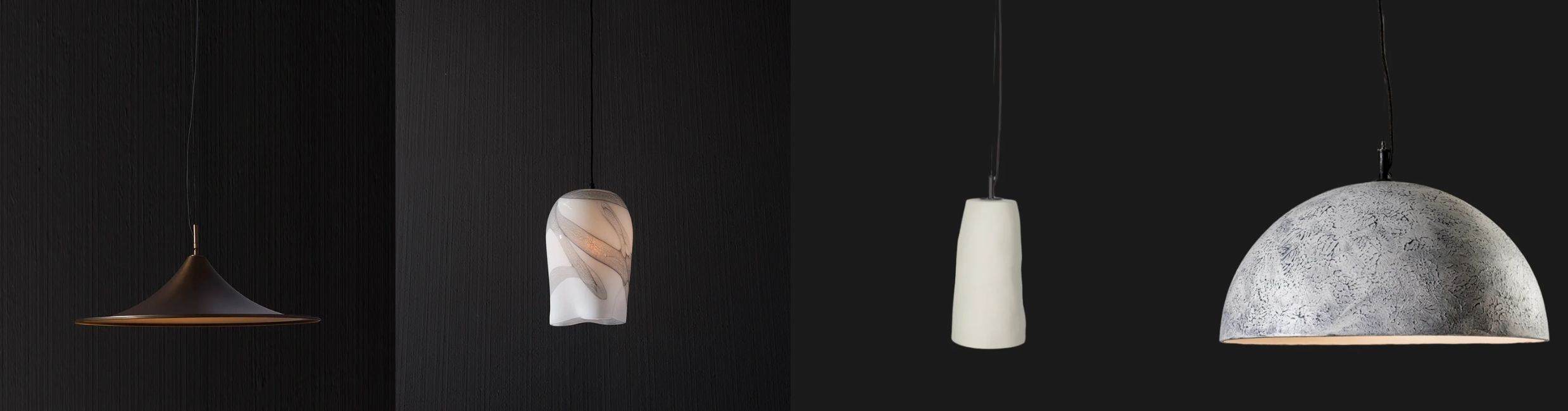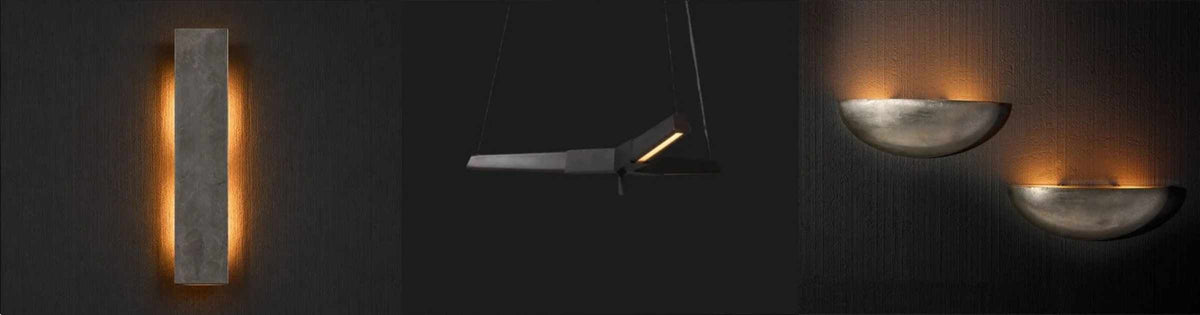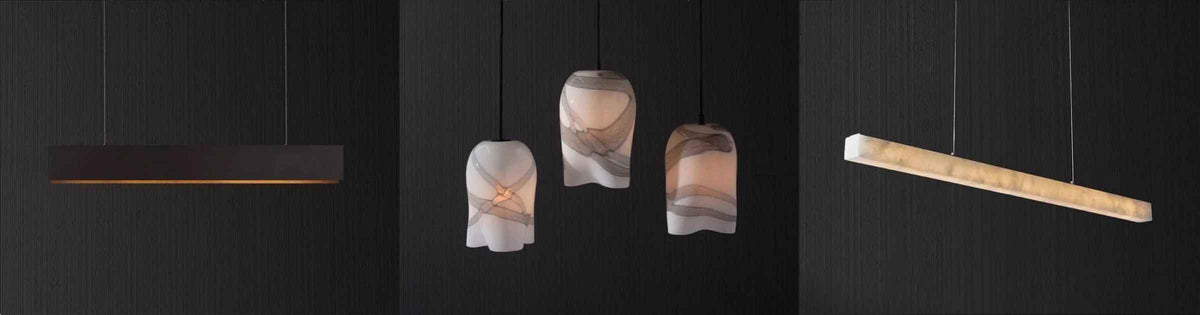
Types of Ceiling Lights and Where to Use Each One
The main types of ceiling lights include flush mounts, semi-flush mounts, recessed lights, pendants, chandeliers, track lighting, linear suspensions, and ceiling fans with lights.
The right choice depends on your ceiling height, room size, lighting needs, and how much visual attention you want the fixture to receive.
Most rooms also benefit from more than one source of light. A ceiling fixture can provide the main overhead lighting, while additional task and accent lighting adds focus where it is needed.
Key takeaways:
-
Flush mounts, compact semi-flush mounts, and recessed lights work well where ceiling clearance is limited.
-
Pendants and linear suspensions are strong choices above kitchen islands, dining tables, counters, and other defined surfaces.
-
Chandeliers work best when the fixture is meant to become part of the room's visual focus.
-
Track and targeted recessed lighting work well when you need directional light.
-
Start with function, ceiling height, and scale before choosing the material or finish.
What Are the Different Types of Ceiling Lights?
Understanding the different types of ceiling lights makes it much easier to narrow your choices. Some fixtures sit almost against the ceiling, while others hang into the room or disappear into the ceiling itself.
Here is how the main options compare:
|
Ceiling Light Type |
Best For |
Main Advantage |
Consideration |
|
Flush mount |
Bedrooms, hallways, low ceilings |
Maximum clearance |
Less visual presence |
|
Semi-flush mount |
Bedrooms, living rooms, entries |
More dimension without a long drop |
Needs more clearance than flush mounts |
|
Recessed |
Kitchens, living areas, hallways |
Clean, broad coverage |
Requires built-in installation |
|
Pendant |
Islands, tables, counters |
Focused light and visual interest |
Hanging height matters |
|
Chandelier |
Dining rooms, living rooms, foyers |
Strong focal point |
Requires the right scale and clearance |
|
Track |
Art, work areas, flexible layouts |
Adjustable direction |
More visually noticeable |
|
Linear suspension |
Islands, long tables, desks |
Covers long surfaces with one fixture |
Must match the surface proportions |
|
Ceiling fan with light |
Bedrooms and living spaces |
Light plus air movement |
Function usually leads the design |
1. Flush Mount Ceiling Lights

A flush mount light sits directly against or very close to the ceiling. Its low profile makes it one of the most practical choices for rooms where head clearance matters.
Flush mounts work particularly well in bedrooms, hallways, closets, bathrooms, and other spaces with lower ceilings. They provide general light without hanging into the room.
Best for: low ceilings and compact spaces
Main benefit: maximum clearance
Consideration: usually less visually dominant than hanging fixtures
2. Semi-Flush Mount Ceiling Lights
Semi-flush mounts hang slightly below the ceiling, creating a small gap between the fixture and ceiling surface.
They offer more depth and decorative presence than a flush mount while still keeping the fixture relatively close overhead. That makes them a useful middle ground for bedrooms, living rooms, hallways, and entryways.
Best for: standard-height rooms that can accommodate some drop
Main benefit: more visual presence than a flush mount
Consideration: check the total fixture height before installing it in a walking area
3. Recessed Ceiling Lights

Recessed lights are installed into the ceiling rather than hanging below it. The result is a clean surface with little visual interruption.
They are often used for general room lighting, targeted task light, or accent light depending on their placement and beam direction. Kitchens and open living areas commonly use several recessed lights rather than relying on a single central fixture.
Best for: broad coverage and visually clean ceilings
Main benefit: very little physical or visual projection
Consideration: installation requires suitable ceiling space and electrical work
4. Pendant Lights

Pendant lights hang from the ceiling using a cord, rod, stem, chain, or similar suspension.
Many pendants direct light toward a surface, making them popular above kitchen islands, dining tables, counters, desks, and bedside areas. Others use glass, open forms, or diffusing shades to spread light more broadly through the room.
A pendant usually hangs from a single suspension point, although multiple pendants can be arranged in rows or clusters.
Best for: focused lighting and decorative impact
Main benefit: combines functional light with a distinct design element
Consideration: scale, spacing, and hanging height all matter
5. Chandeliers

Chandeliers are hanging ceiling fixtures that commonly use multiple arms, branches, or light sources.
They work particularly well in dining rooms, living rooms, stairwells, and foyers where there is enough space for a larger fixture. Unlike a smaller pendant, a chandelier often plays a major role in the overall composition of the room.
Best for: larger spaces and focal-point lighting
Main benefit: strong visual presence
Consideration: can overwhelm a room if the fixture is too large or hangs too low
6. Track Lighting

Track lighting places several adjustable light heads along a ceiling-mounted track.
Because each head can be aimed independently, track lighting works well for artwork, shelving, work areas, architectural details, and rooms where the lighting direction may change over time.
Best for: directional task and accent light
Main benefit: adjustable positioning
Consideration: the track remains visible and may not suit interiors where the goal is a very minimal ceiling
7. Linear Suspension Lights

A linear suspension extends horizontally rather than concentrating the fixture around one central point.
Its proportions make it particularly useful over rectangular dining tables, kitchen islands, counters, conference tables, and long desks. A single linear fixture can provide visual continuity across a long surface without requiring a row of individual pendants.
RENG also uses linear suspensions as statement fixtures in its kitchen-lighting guidance and collection.
Best for: long tables, islands, and work surfaces
Main benefit: balanced coverage across an elongated area
Consideration: fixture length should relate to the surface below it
8. Ceiling Fans With Lights
A ceiling fan with a light combines general overhead light with air circulation.
It is most relevant in bedrooms, family rooms, and other spaces where both functions are useful. These fixtures tend to be selected for practical reasons first, so they serve a different role from decorative pendants and chandeliers.
Best for: rooms where lighting and air movement are both priorities
Main benefit: two functions in one ceiling fixture
Consideration: confirm ceiling clearance, size, and mounting requirements
How Do Ceiling Light Types Compare?
Several ceiling light types perform similar jobs, but small differences in height, direction, and visual weight can make one option much better for a particular room.
Flush Mount vs. Semi-Flush Mount
Choose a flush mount when clearance is the main concern. Choose a semi-flush mount when you have slightly more ceiling height and want the fixture to have greater visual presence.
For an 8-foot ceiling, a flush mount is often the easier starting point in open walking areas. A compact semi-flush fixture can still work when its total drop leaves comfortable clearance.
Pendant vs. Chandelier

Choose a pendant when you want light directed toward a specific area such as an island, table, or counter.
Choose a chandelier when the fixture needs to provide light while acting as a larger visual focal point. Pendants are commonly based around one primary suspension point, while chandeliers often contain several arms or light sources.
Track vs. Recessed Lighting

Choose track lighting when adjustability matters. Individual heads can be redirected as furniture, artwork, or room functions change.
Choose recessed lighting when you want the light source to visually recede into the ceiling. Both can provide targeted lighting, but they create very different ceiling appearances.
Which Types of Ceiling Lights Work Best in Each Room?
When comparing types of ceiling lights for home use, room function matters as much as style. A kitchen may need focused light over work surfaces, while a bedroom usually benefits from softer general light.
|
Room |
Recommended Ceiling Lights |
Main Priority |
|
Bedroom |
Flush, semi-flush, small chandelier |
Comfortable general light and clearance |
|
Living room |
Semi-flush, chandelier, recessed, track |
Layered ambient and accent light |
|
Kitchen |
Recessed, track |
Broad coverage and task light |
|
Kitchen island |
Pendant, linear suspension |
Focused light over the work surface |
|
Dining room |
Pendant, chandelier, linear suspension |
Light centered around the table |
|
Bathroom |
Flush, recessed |
Suitable location rating and clear general light |
|
Hallway |
Flush, recessed |
Clearance and even coverage |
|
Entryway |
Semi-flush, pendant, chandelier |
Scale and first visual impression |
|
Home office |
Linear, recessed, track |
Controlled task light and reduced glare |
What Are the Best Bedroom Ceiling Lights?

The best bedroom ceiling lights are usually flush mounts or semi-flush mounts because they provide general light without taking up unnecessary vertical space.
A chandelier or pendant can also work in a larger bedroom with more ceiling height, especially when it hangs above a bed or another fixed area rather than an open walking path.
The ceiling fixture does not need to handle every lighting job. Bedside lamps, wall lights, or other secondary sources can make the room more comfortable at night.
How Do You Choose the Right Ceiling Light?
The best fixture is not simply the one that looks best in isolation. It needs to suit the room's purpose, proportions, ceiling height, and lighting requirements.
Start With the Lighting Purpose
First decide what the light needs to do.
Ambient lighting provides the room's main general light. Flush mounts, semi-flush mounts, chandeliers, and well-positioned recessed lights commonly fill this role.
Task lighting directs more light toward an activity such as cooking, reading, or working. Pendants, track lights, linear suspensions, and targeted recessed lights are useful options.
Accent lighting calls attention to artwork, shelving, textures, or architectural details. Adjustable track or recessed lighting is particularly useful here.
Many rooms work best when these functions are combined rather than asking one piece of overhead lighting to do everything.
Match the Fixture to Your Ceiling Height
Low ceilings generally call for fixtures with less vertical projection. Flush mounts, recessed lights, and compact semi-flush fixtures are the easiest starting points.
Higher ceilings create more room for pendants, chandeliers, and larger statement pieces.
In open areas, a good rule is to keep about 7 feet of clearance from the floor to the bottom of the fixture. Hanging lights above a dining table, island, or other fixed surface can drop lower because people do not walk directly underneath them.
Choose the Right Fixture Size
One common starting method is to add a room's length and width in feet and treat that total as an approximate fixture diameter in inches.
For example:
- 10 x 10-foot room: about a 20-inch fixture
- 12 x 14-foot room: about a 26-inch fixture
- 15 x 15-foot room: about a 30-inch fixture
For dining tables and kitchen islands, the existing RENG guide suggests starting around one-half to two-thirds of the surface width. Pendants and chandeliers are commonly positioned around 30 to 36 inches above a table or countertop. These measurements are starting points rather than fixed requirements.
Room proportions, sightlines, fixture shape, furniture, and ceiling height can all change what looks right.
Check Brightness and Color Temperature

Do not choose a fixture based on wattage alone.
Lumens measure light output, so they are the more useful number when comparing brightness.
Also check the light's color temperature, measured in Kelvin. Correlated color temperature describes the appearance of the light itself, from warmer to cooler-looking white light.
The best choice depends on the atmosphere and function you want in the room.
Check Dimming, Installation, and Location Requirements
Before ordering a fixture, review the specifications beyond size and appearance.
Check:
-
whether the fixture and light source are dimmable
-
whether it uses replaceable bulbs or integrated LEDs
-
compatibility with your planned dimmer or controls
-
whether it can be installed on a sloped ceiling, if needed
-
dry, damp, or wet-location suitability
-
fixture weight and mounting requirements
-
maximum hanging height
-
relevant safety certification
Location ratings matter particularly in bathrooms, covered exterior areas, and other spaces where moisture may be present. Fixtures intended for damp or wet locations should carry the appropriate marking for that use.
What Ceiling Lighting Mistakes Should You Avoid?

Even an attractive fixture can feel wrong when its size, position, or light output does not suit the room.
Choosing a fixture that is too small: A small light can disappear visually in a large room. Check room and furniture proportions before selecting the diameter or length.
Depending on one ceiling light: One central source can leave work areas, corners, or architectural features poorly lit. Add task or accent layers where they serve a clear purpose.
Hanging a light too low: Consider sightlines and clearance, especially in open areas.
Ignoring glare: A very bright exposed source at eye level can become uncomfortable even if it provides enough light.
Ignoring location requirements: Bathrooms and other moisture-prone areas may require fixtures marked for the conditions where they will be installed.
Choosing appearance before function: Start with the room and lighting job. Material, finish, and decorative details should come after the practical requirements are clear.
Frequently Asked Questions About Ceiling Lights
I. What ceiling light is best for a low ceiling?
Flush mounts and recessed lights are usually the strongest starting options because they take up little or no vertical space. Compact semi-flush fixtures can also work when there is enough clearance.
II. Are ceiling light fitting types and ceiling light fixture types the same thing?
In everyday use, ceiling light fitting types and ceiling light fixture types generally describe the same broad categories of ceiling-mounted lighting, including flush mounts, pendants, chandeliers, recessed lights, and track systems.
Terminology can vary by country, manufacturer, and retailer, so comparing the actual installation method and fixture dimensions is more useful than relying on the label alone.
III. Can you mix different types of ceiling lighting in one room?
Yes. In fact, combining different types of ceiling lighting can solve several needs at once.
A kitchen, for example, might pair recessed general lighting with pendants or a linear suspension over the island. A living room might combine a central decorative fixture with directional ceiling lights for artwork.
IV. What type of ceiling light gives the most flexible lighting?
Track lighting offers some of the greatest flexibility because individual heads can usually be aimed toward different areas.
For spaces where the furniture, artwork, or room purpose may change, that adjustability can be particularly useful.
V. Are pendant lights good for general room lighting?
They can be, but it depends on the pendant design.
A downward-facing pendant may concentrate more light on the surface below, while glass, open, or diffused designs can spread light more widely. In larger rooms, pendants often work best as one part of a layered plan rather than the only source.
VI. What should you check before buying a ceiling light?
Check the fixture's dimensions, ceiling drop, light output, color temperature, dimming compatibility, installation method, location rating, mounting requirements, and the size of the room or surface below it.
This makes it easier to eliminate unsuitable fixtures before making the final style decision.
How Should You Choose Your Ceiling Light?
Choosing between the many ceiling light types becomes much simpler when you make the decisions in the right order:
-
Measure the ceiling height. This quickly tells you how much vertical space is available.
-
Decide what the light needs to do. Identify whether you need ambient, task, accent light, or a combination.
-
Choose the fixture category. Narrow the options to flush, semi-flush, recessed, pendant, chandelier, track, linear, or another suitable type.
-
Check scale and clearance. Compare the fixture with the room and any furniture below it.
-
Review the technical details. Check light output, color temperature, dimming, mounting, and location requirements.
-
Choose the design. Once the practical details are right, select the material, form, and finish that belong in the room.
There is no single ceiling light that works everywhere. The best types of ceiling lights are the ones that fit the architecture, serve the right lighting purpose, and feel appropriately scaled to the space.
For rooms where the ceiling fixture should become part of the design itself, browse RENG's artisan-made hanging lights and ceiling lighting to find pendants, linear suspensions, and statement fixtures made for distinctive interiors.