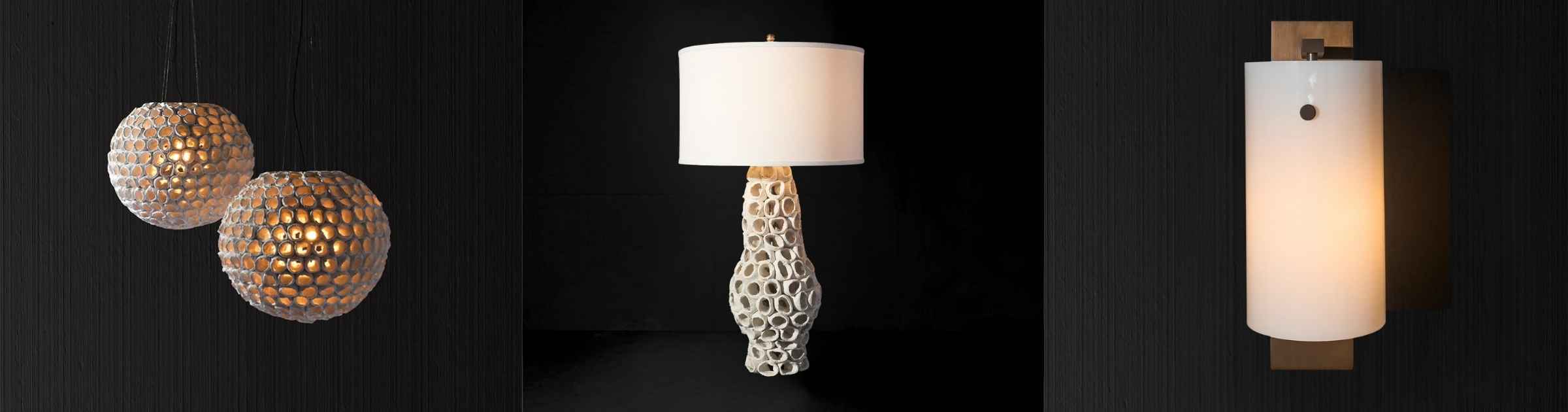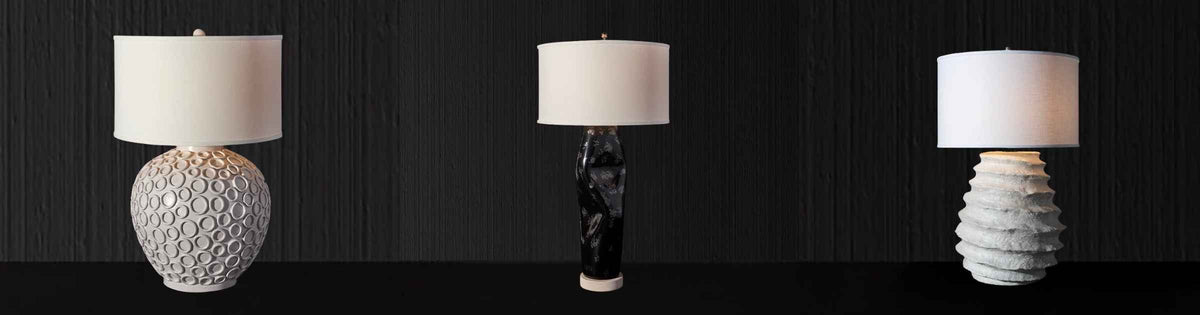
Luxury Table Lamps – A Definitive Guide for Design-Forward Homes
A luxury table lamp should do more than fill a surface. It should add material presence, useful light, and a strong design point of view.
Below, we compare 21 RENG table lamps by material, dimensions and style so you can quickly find the right direction for a bedside table, console, living room side table, desk, or accent surface.
RENG’s table lamp collection currently includes 21 designs across alabaster, ceramic, crystal, glass, and metal.
Alabaster Luxury Table Lamps
Alabaster is a strong choice when you want a table lamp with natural material depth and a quieter, more substantial presence. RENG currently lists two alabaster table lamps in the table lamp collection.
1. Chanku

Dimensions: 19 in W x 19 in D x 32.5 in H
Material: Alabaster; white linen shade
Chanku is a solid alabaster monolith table lamp with a clean vertical body and off-white linen shade. Its 55-pound weight and narrow stone body give it a substantial, architectural presence. The simple shade keeps the focus on the alabaster base and its natural material character.
2. Tanjun

Dimensions: 17.5 in W x 17.5 in D x 32 in H
Material: Alabaster; white linen shade
Tanjun is a tapered alabaster column lamp with a refined, minimal silhouette. It has a slimmer body than Chanku while still keeping the visual weight of natural stone. The white linen shade softens the overall look and keeps the design clean.
Crystal Luxury Table Lamps
Crystal table lamps work well when the room needs polish, reflection, and a more luminous decorative presence. RENG lists four crystal table lamps in the collection.
3. Gyo

Dimensions: 18 in W x 18 in D x 35 in H
Material: Crystal; white linen shade
Gyo is an incised rib crystal column lamp with a classic linen-shade profile. The ribbed crystal body gives the lamp more texture than a plain column. Its 35-inch height makes it a polished vertical accent for surfaces with enough space.
4. Kuro

Dimensions: 18 in W x 18 in D x 34 in H
Material: Crystal; white linen shade
Kuro features an ebony crystal jar form for a darker, more dramatic crystal look. The deep crystal finish gives it more contrast than the clear or turquoise crystal options. Its white linen shade balances the darker body with a softer upper profile.
5. Sukini

Dimensions: 18 in W x 18 in D x 38.5 in H
Material: Crystal; white linen shade
Sukini is a turquoise narrow taper crystal column lamp with a tall, colorful profile. The turquoise crystal gives the lamp a stronger decorative presence than a neutral design. Its slim body and 38.5-inch height create a vertical shape without a bulky base.
6. Surinda

Dimensions: 18 in W x 18 in D x 39 in H
Material: Crystal; white linen shade
Surinda is a turquoise crystal column lamp with a tall silhouette and off-white linen shade. It is slightly taller than Sukini, giving it a more elongated profile. The crystal body adds color and polish while the linen shade keeps the lamp grounded.
Glass and Metal Luxury Table Lamps
Glass and metal lamps are useful when you want a cleaner, more architectural, or more compact design direction. RENG lists one glass and two metal table lamps in the collection.
7. Cercle I

Dimensions: 10 in W x 10 in D x 30 in H
Material: Glass; crystal shade
Cercle I is a glass task-style lamp with a compact footprint and crystal shade. At 10 inches wide, it is one of the narrowest table lamps in the collection. The glass and crystal combination gives it a lighter visual presence than the larger ceramic or alabaster pieces.
8. Frame

Dimensions: 19 in W x 19 in D x 35.5 in H
Material: Metal; white linen shade
Frame is a broken-circle metal table lamp with an acrylic mount and graphic shape. Its circular body gives it a more sculptural look than a traditional column or gourd lamp. The white linen shade keeps the design functional while the base adds visual movement.
9. Kusho

Dimensions: 7 in W x 7 in D x 23.75 in H
Material: Metal; no shade
Kusho is a compact integrated LED piece with an architectural void-space form. It does not use a traditional shade, which makes it feel more like a sculptural accent light. Its 7-inch width gives it the smallest footprint in this list.
Ceramic Luxury Table Lamps
Ceramic is the largest category in RENG’s table lamp collection. These designs range from compact hand-formed forms to large double-gourd and column lamps. RENG currently lists 11 ceramic table lamps in the collection.
10. Haibu

Dimensions: Not listed on the product page
Material: Hand-formed ceramic
Haibu has a rounded ceramic form with a grooved spiral pattern and stippled texture. The hand-formed construction gives it a more artisanal look than a smooth, machine-like base. Since dimensions are not listed, confirm scale before publishing or embedding the product card.
11. Hekoni

Dimensions: 19 in W x 19 in D x 41 in H
Material: Black glazed ceramic; off-white linen shade
Hekoni is a tall black glazed ceramic table lamp with a simple linen shade. Its 41-inch height makes it one of the taller options in the collection. The black glazed body creates strong contrast, while the off-white shade softens the overall profile.
12. Matto

Dimensions: 24 in W x 24 in D x 42 in H
Material: Ceramic; cream linen shade
Matto is an oval ceramic table lamp with a glazed-to-matte finish and large-scale profile. Its 24-inch width and 42-inch height make it one of the largest table lamps in the collection. The cream linen shade supports the softer finish of the ceramic body.
13. Nami

Dimensions: Body dimensions: 7.5 in W x 7.5 in D x 35 in H; overall dimensions not listed
Material: Ceramic
Nami is a slender hand-formed ceramic lamp with a stippled surface texture. RENG notes that its slim profile makes it suitable for accent lighting on nightstands or consoles. The narrow body helps it bring height and texture without taking up much visual width.
14. Oki

Dimensions: 24 in W x 24 in D x 36 in H
Material: Ceramic; white linen shade
Oki is a white ceramic double-gourd table lamp with cross-hatching details. Its 24-inch width and 45-pound weight give it a substantial presence. The white ceramic and white linen pairing keeps the larger form from feeling too heavy visually.
15. Reef

Dimensions: 20 in W x 20 in D x 41 in H
Material: Ceramic; cream linen shade
Reef is a matte ceramic column table lamp with a warm cream shade. Its 41-inch height gives it strong vertical presence. The matte finish and cream linen shade make the design feel softer than glossy ceramic or crystal options.
16. Ribu

Dimensions: 20 in W x 20 in D x 33 in H
Material: Ceramic; white linen shade
Ribu is a glazed terracotta gourd-form lamp with a warm, sculptural body. The terracotta finish gives it an earthier character than the white and off-white ceramic pieces. Its 33-inch height makes it more moderate in scale than taller options like Reef, Hekoni, or Matto.
17. Ringa

Dimensions: Not listed on the product page
Material: Hand-formed ceramic
Ringa is a substantial ceramic table lamp with hand-applied ring details and a crisp white glaze. The ringed surface gives the lamp texture while keeping the color palette restrained. Since dimensions are not listed, confirm scale before publishing or placing it in a comparison table.
18. Santal

Dimensions: Body dimensions: 10.75 in W x 10.75 in D x 21 in H; overall dimensions not listed
Material: Ceramic
Santal is a cylindrical ceramic table lamp with a hand-crafted stippled texture. RENG describes it as suitable for bedside tables, desks, or accent lighting in living spaces. Its compact body dimensions make it one of the easier ceramic designs to place on smaller surfaces.
19. Také

Dimensions: 19 in W x 19 in D x 33.5 in H
Material: Ceramic; white linen shade
Také combines ebony glazed terracotta and bamboo for a warmer organic material mix. The darker body and natural bamboo detail give it a different character from the cleaner white ceramic pieces. Its 19-inch shade and 33.5-inch height keep it within a moderate table-lamp scale.
20. Tanabé

Dimensions: 24 in W x 24 in D x 37.5 in H
Material: Ceramic; white linen shade
Tanabé is an off-white glazed terracotta double-gourd table lamp with a broad shade. Its 24-inch width gives it a larger footprint than Togé or Ribu. The off-white finish keeps the double-gourd shape elegant rather than overly bold.
21. Togé

Dimensions: 20 in W x 20 in D x 33 in H
Material: Ceramic; off-white linen shade
Togé is a glazed terracotta double-gourd table lamp with a softer, moderate-scale profile. Compared with Tanabé, it has a smaller width and lower overall height. The off-white linen shade gives the terracotta body a warm, balanced finish.
How to Choose a Luxury Table Lamp by Material
The fastest way to narrow the list is to start with material.
- Choose alabaster if you want natural stone presence, soft visual weight, and a refined neutral look. Chanku and Tanjun are the alabaster options in this collection.
- Choose crystal if you want polish, reflection, color, or a more luminous decorative effect. Gyo, Kuro, Sukini, and Surinda are the crystal options.
- Choose ceramic if you want texture, hand-formed character, gourd forms, matte finishes, or warmer material depth. This is the largest category in the RENG table lamp collection.
- Choose glass or metal if you want a cleaner, more modern, or more architectural direction. Cercle I, Frame, and Kusho sit in this group.
How to Choose by Scale
Scale is where most table lamp mistakes happen. Before choosing a lamp, check the width of the shade, total height, body width, and weight.
Use these quick rules:
- For narrow surfaces: Start with smaller-footprint designs such as Cercle I, Kusho, Santal, or Nami.
- For large consoles: Look at wider or taller designs such as Matto, Tanabé, Oki, Reef, Hekoni, or Chanku.
- For bedside tables: Confirm that the lamp’s shade height works from a seated position. The bottom of the shade should generally sit near eye level when seated, which helps reduce glare. The current draft already includes this useful scale advice and should retain it in compressed form.
- For visual weight: A heavy alabaster or ceramic lamp should sit on furniture with enough surface area and physical stability.
FAQs About Luxury Table Lamps
I. What makes a table lamp luxury?
A luxury table lamp usually combines elevated materials, strong proportions, considered shade design, and enough visual presence to contribute to the room even when the light is off. In the RENG collection, that shows up through materials such as alabaster, ceramic, crystal, glass, and metal.
II. Which RENG table lamp is best for a small surface?
For smaller surfaces, start by checking lamps with narrower listed dimensions. Cercle I is listed at 10 in W x 10 in D, and Kusho is listed at 7 in W x 7 in D. Santal and Nami also have relatively compact listed body widths, though their full shade dimensions are not fully listed on the visible product pages.
III. Which RENG table lamps are best for large surfaces?
For larger surfaces, consider lamps with wider shades, taller heights, or heavier listed weights. Matto, Oki, Tanabé, Reef, Hekoni, and Chanku are all larger-scale options based on RENG’s listed dimensions and weights.
IV. Which material should I choose for a luxury table lamp?
Choose alabaster for stone presence, crystal for reflection and polish, ceramic for texture and sculptural weight, glass for visual lightness, and metal for a more architectural look. RENG’s table lamp collection includes all five material groups.
V. Are ceramic table lamps good for luxury interiors?
Yes. Ceramic table lamps can work especially well in luxury interiors because they add texture, form, and material depth without relying on shine. RENG’s ceramic collection includes rounded, column, gourd, terracotta, and hand-formed designs.
VI. Should table lamps match in a bedroom?
They can, but they do not have to. Matching lamps create symmetry. Mismatched lamps can still work if they share similar height, shade color, material tone, or visual weight.
VII. How do I know if a table lamp is too large?
Check the shade diameter, total height, and listed weight against the furniture. A 24-inch-wide lamp can feel oversized on a narrow nightstand but appropriate on a large console or substantial side table.
Conclusion
The best luxury table lamp is not just the most decorative one. It is the one with the right material, scale, shade, and visual weight for the surface it will occupy.
RENG’s table lamp collection gives you a wide range of options: alabaster for stone presence, crystal for polish, ceramic for texture, glass for clarity, and metal for architectural form. Start with the material you want, then use the dimensions and placement notes above to choose the lamp that fits your room.