Best Statement Lighting for Dining Rooms - A 2026 Guide
The best statement lighting for a dining room depends on the table, the proportions of the space, and the atmosphere you want to create. A fixture that feels perfect above a long rectangular table may overwhelm a smaller round table, and the right choice is ultimately about finding the balance between scale, shape, and style.
On top of that, a statement lighting fixture has to do two jobs at once. One, it's the main light over the table, so it has to make the meal easy to see and comfortable to sit under. Second, it's also the first thing anyone notices when they walk in, so it must set the tone for the whole room, and a piece that doesn't fit the table fails at both.
What Is the Best Statement Lighting for a Dining Room?
The best statement lighting for a dining room depends on the shape of the table, the size of the space, and the overall design style. The most popular options include:
- Sculptural chandeliers for creating an artistic focal point in the room.
- Linear chandeliers for long rectangular or oval dining tables.
- Oversized pendants for a simple, dramatic centerpiece.
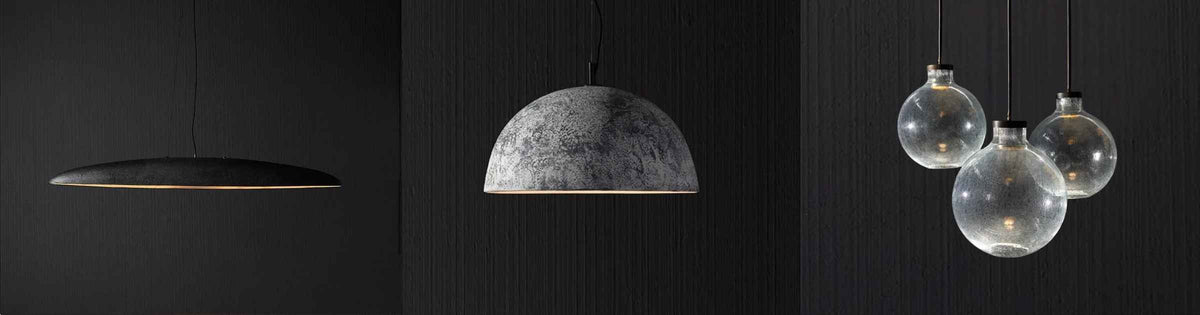
- Pendant clusters for adding depth and visual interest, especially in rooms with higher ceilings.
The right fixture comes down to proportion and purpose. Table shape determines the fixture’s form, ceiling height affects how it hangs, and warm, dimmable light ensures the space feels comfortable for both everyday meals and entertaining.
That's a lot to weigh at once, so we'll take it one piece at a time. Below, we cover each fixture type first, then sizing, hanging height, and light quality, so the piece you pick works after dark as well as it looks in daylight.
Key takeaways:
- Match the fixture to the table: linear chandeliers or a row of pendants for rectangular and oval tables. Or, a single chandelier, oversized pendant, or cluster for round and square ones.
- Measure the table first, then size the fixture to roughly one-half to two-thirds of its width.
- Hang it about 30 to 36 inches above the tabletop, adjusting for ceiling height and sightlines.
- Choose warm light around 2700K on a dimmer so the same fixture works for weeknight dinners and late evenings with guests.
- Keep the statement fixture as the focal point, but pair it with sconces, lamps, or recessed lighting so it isn't doing all the work.
What Is Statement Lighting for a Dining Room?

Statement lighting for a dining room is a fixture chosen for how it looks as much as for the light it gives off. It's the piece people notice first when they walk in, and the room is arranged around it.
That doesn't mean it has to be big. A single alabaster pendant that glows from within can hold a room as well as a wide chandelier, because the impact comes from a distinctive shape, an unusual material, a hand-finished surface, or the way several smaller pieces are arranged together.
The dining table is the easiest place in the house to pull this off, since the table stays put and gives the fixture a fixed spot to hang over. However, this is different from a standard decorative ceiling light, which is picked to blend in with the room.
What Are the Best Types of Statement Lighting for Dining Rooms?
The best statement lighting for dining rooms falls into four types: sculptural chandeliers, linear chandeliers, oversized pendants, and pendant clusters. Each one solves a different problem, so the useful question isn't which looks best in a photo but which fits the table and room you already have.
Sculptural Chandeliers
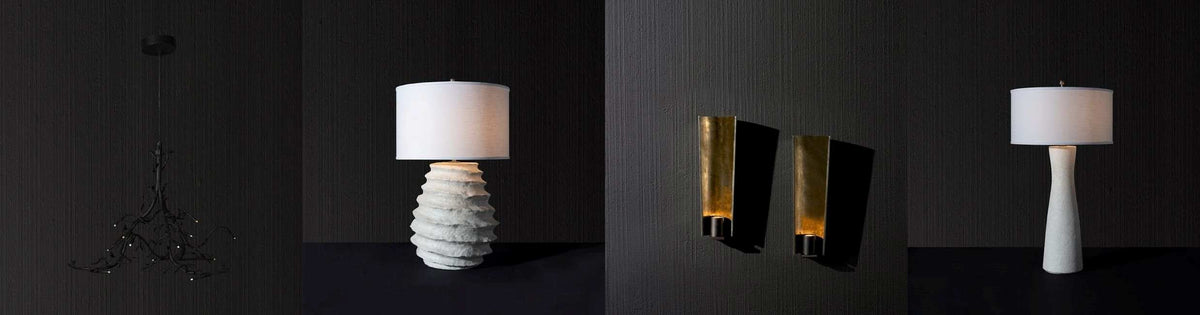
A sculptural chandelier works best when you want the fixture to act like a piece of art that happens to give off light. Think of a hand-shaped ceramic form or an asymmetrical arrangement of arms, hung over a plain table with simple chairs, so nothing competes with it.
That makes it a natural fit for a dedicated dining room. One thing to weigh is visual heaviness, since a dense, solid form feels much larger than an open one of the same measured width.
Linear Chandeliers

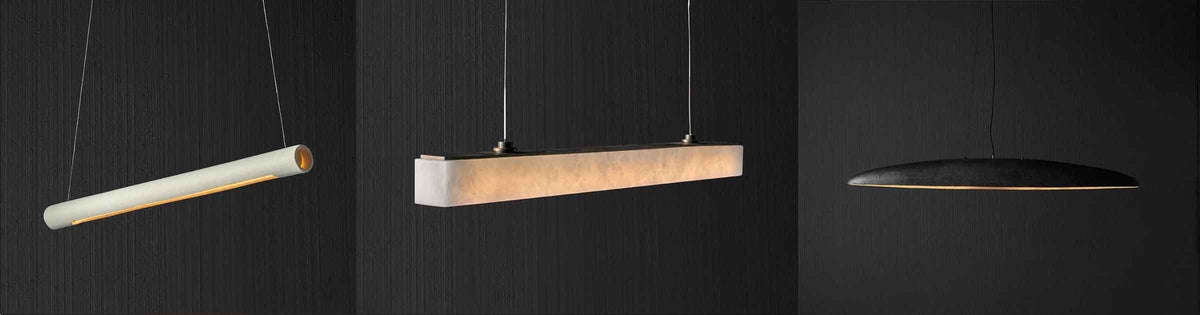
A linear chandelier is the go-to for long rectangular or oval tables, because its horizontal shape follows the table instead of sitting in the middle of it. That also spreads light across more of the tabletop than a compact central fixture can, which matters at a table seating eight or more.
RENG's Teashi, a 35.5-inch ceramic bar, and the alabaster Surimu I at 23.5 inches are both built for exactly this job, and they suit modern dining rooms especially well.
Oversized Pendant Lights
One oversized pendant works when a single dramatic form can anchor the whole dining area on its own. It's a strong choice over round, square, or smaller tables, as long as the proportions hold.
Material makes a big difference here. A large glass pendant lets light and sightlines pass through it, so it can be bigger than you'd expect, whereas a solid metal or ceramic form of the same size will feel far heavier in the room.
Pendant Clusters and Multi-Light Fixtures
A cluster of pendants works well in rooms with tall ceilings, over round tables, or anywhere the space needs more going on vertically. Instead of relying on one massive fixture, several smaller pieces create the effect together, and hanging them at staggered heights adds movement and depth that a single fixture can't.
|
Type |
Best For |
Main Benefit |
Watch For |
|
Sculptural chandelier |
Design-led dining rooms |
Strong artistic focal point |
Room already has several competing focal points |
|
Linear chandelier |
Rectangular or long tables |
Follows table proportions |
Small round tables |
|
Oversized pendant |
Simple rooms needing one strong feature |
Strong impact with one fixture |
Fixture overwhelms table width |
|
Pendant cluster |
High ceilings and custom layouts |
Vertical depth and flexibility |
Low ceilings or visually busy rooms |
|
Multi-light chandelier |
Larger tables |
Wider light distribution |
Scale doesn't match table |
A note on 2026 trends: The fixtures getting the most attention this year share a few traits. Sculptural and asymmetrical forms, handmade surfaces that show a little imperfection, and vintage-inspired silhouettes keep coming up.
Materials like alabaster, glass, and aged or warm-toned metals keep coming up too, along with a preference for softer, warmer light over anything crisp and bright.
How Do You Choose Statement Lighting for Your Dining Table Shape?
Choose statement lighting by matching the fixture's shape to the table's shape. A long fixture over a long table looks like it belongs there, while the same fixture over a round table looks like it was bought for a different room.
Round or Square Dining Tables
A round or square table has one obvious center, so the fixture should hang there and hold that center.
A single chandelier, one oversized pendant, or a ring-shaped fixture all do this well, because their shape mirrors the table below. A tight cluster of three or five pendants works too, as long as the group reads as one centered form rather than a scattered row.
Rectangular or Oval Dining Tables
A rectangular or oval table needs light spread along its length, not piled up in the middle. Picture a six-foot table with a single small pendant over the center, which leaves the two end seats eating in shadow.
A linear chandelier, an elongated sculptural piece, or two or three pendants in a row fixes that by carrying light out toward both ends, and the fixture's proportions follow the table instead of fighting it.
Extendable Dining Tables
An extendable table is really two tables, the short one you use most days and the long one you pull out for a holiday, and the fixture has to look right over both. The safer bet is to size it for the long version. A linear fixture or a row of well-spaced pendants covers the extra length without looking oversized on an ordinary Tuesday, whereas a compact central fixture will look out of place once the table stretches out.
Also, there’s one rule that holds for every table shape:
Center the fixture on the table, not on the room. If you've deliberately placed the table off to one side to leave space for a sideboard or a walkway, the light should follow it there.
What Size Statement Light Should You Use Over a Dining Table?

Size the fixture to the table, and measure the table before you shop.
A useful starting range, and the one we use for dining spaces, is a fixture roughly one-half to two-thirds the width of the table. So a 42-inch-wide table pairs with something between 21 and 28 inches across, while a 60-inch table can carry 30 to 40 inches. Treat that as a range to start from, though, rather than a rule to obey.
A second check is clearance. Leaving at least six inches between the fixture's edge and the table's edge on every side keeps guests from bumping it when they stand up. Plus, it stops the fixture from looking like it's spilling over the table.
The fixture's density changes what those numbers mean in practice. Take a thin brass frame or a ring of clear glass, for example. Because you can see through it, it can go bigger than the range suggests without crowding the room. A solid alabaster or ceramic form of the same width, however, blocks the view and pulls far more attention. So, if you're torn between two sizes of a dense fixture, then size down.
After that, glance at the room and ceiling. A large, tall room can handle the top of the range, and a small or low-ceilinged one usually looks better near the bottom.
Use this table to make things simple:
|
Table width |
Suggested fixture width |
|
36 in |
18 to 24 in |
|
42 in |
21 to 28 in |
|
48 in |
24 to 32 in |
|
60 in |
30 to 40 in |
|
72 in (long table, linear fixture) |
36 to 48 in |
How High Should Statement Lighting Hang Above a Dining Table?
Hang the bottom of the fixture 30 to 36 inches above the tabletop. That's the modern convention for a standard eight-foot ceiling, and it's where the majority of dining rooms end up.
To get the exact height:
- Start at 30 inches above the table for a standard eight-foot ceiling.
- Go toward 36 inches if the fixture is large or visually heavy.
- Add about three inches for every foot of ceiling height above eight feet, or choose a fixture with a longer drop so it still reaches down into the dining zone.
- Sit down and check. You should see the face across the table without the fixture in the way, and the light should still feel like it belongs to the table rather than floating somewhere above the room.
Note that both extremes cause problems. Hang it too high and it reads as a ceiling light that happens to be near the table, losing the anchoring effect that made it a statement piece in the first place. Hang it too low and it cuts off conversation, and a bare bulb at eye level produces glare that no amount of good design makes up for.
What Light Temperature and Brightness Work Best for Dining Rooms?

Warm, dimmable light works best in a dining room. That's because a fixture has to do more than look good in daylight. It also has to make dinner feel comfortable after dark, which is when the room actually gets used.
Warm, in this case, has a number. Light color is measured in Kelvin, and the lower the number, the warmer the glow. Around 2700K, the color of a classic incandescent bulb, is the reference point most dining rooms should aim for, which is also why RENG builds its integrated LEDs at that temperature. Treat it as a target, though, and not a hard rule.
Dimmable matters because one room has to do several jobs from the same fixture:
- Full brightness for homework, paperwork, or a weeknight meal
- Halfway down for a dinner party
- Low for a late glass of wine
Neither setting helps if the light itself is harsh, so the material of the fixture matters as much as the bulb. A diffusing shade, whether alabaster, ceramic, or frosted glass, softens the light so you see a glow instead of a bare bulb, and that cuts glare for anyone sitting underneath.
Even with all of that right, the statement piece shouldn't be the only light in the room. Wall sconces, a lamp on the sideboard, or a few recessed lights fill in the corners, while the fixture over the table stays the thing everyone looks at.
Conclusion
The best statement lighting for a dining room is the piece that fits the table you already own, in shape, in size, and in how high it hangs. Everything else, from the fixture type to the light temperature, follows from that.
So measure the table before you fall in love with a fixture. Scale is what separates a dining room that looks designed from one where the light feels like an afterthought.
When you're ready to find yours, our hanging lights collection covers linear suspensions, single pendants, and multi-light forms, each handmade in Italy and built with the warm, dimmable light a dining table deserves.