Luxury Home Lighting Ideas That Transform Any Room
Luxury home lighting ideas have the power to transform any room, often without changing a single piece of furniture.
Think about the last room that stopped you in your tracks. Chances are, the lighting was doing something right. For example, a warm glow over the dining table, a softly lit corner, or a pendant glowing gently above an armchair. Small details, sure, but ones that make a room feel genuinely special.
But what exactly goes into luxury home lighting that makes such a difference?
At its core, luxury home lighting is about making a room feel more expensive and inviting through better use of light. In practice, that means using more light sources, choosing better materials, and being more deliberate about where each fixture goes.
Read on as we walk through everything that goes into getting it right, from what makes lighting feel high-end to the mistakes worth avoiding before you spend a penny.
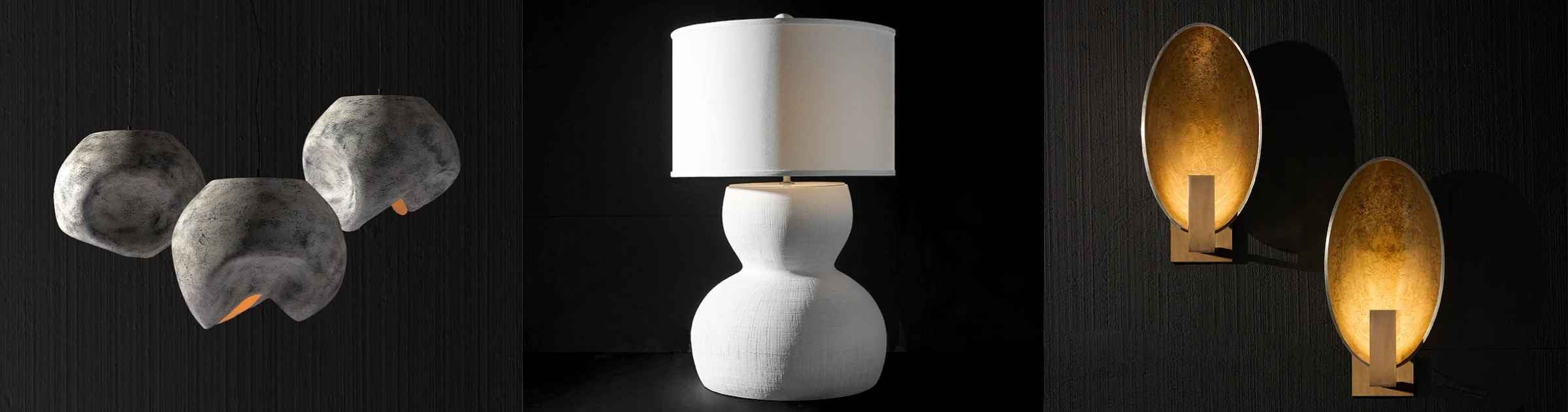
If you’re looking for lighting examples, we’d encourage you to check out our large collection of luxury home lighting fixtures that is sure to spark your ideas for transforming your home.
What Makes Lighting Look Luxurious?

Luxury lighting is all about how light spreads across a room. From where it comes, to where it goes, and where it lands. In all, there are three factors that determine whether a room gets that right.
1. Balance, Not Just Price
Most people assume luxury lighting starts with budget. It doesn't. A well-placed, modestly priced fixture in the right finish will always outperform an expensive one in the wrong position. Essentially, what makes a room feel high-end is how all the elements work together, including the light sources, the scale, and the finish and not just how much any single piece costs.
2. Scale, Placement, and Finish
These three elements do more to shape how a fixture feels in a room than anything else.
With scale, it all comes down to the size of the fixture relative to the room and the furniture around it. A fixture that is too small gets lost in the space and fails to anchor anything, while one that is too large for a low ceiling feels like it is bearing down on the room rather than complementing it.
And what about placement? Where a fixture sits determines whether it works well or simply takes up space. A chandelier hung too high defeats its purpose entirely. You want it to draw the eye and fill the room with a sense of grandeur. But placed too high, and it’s too distant from the space below to make any real impact.
Finally, finish is perhaps the most overlooked of the three. It refers to the surface material and treatment of a fixture, and it determines how a piece looks when lit, how it sits alongside the other materials in the room, and whether the whole area feels pulled together or not.
3. Architectural Lighting

Most people don't think about this one, but using light to highlight a textured wall, a ceiling detail, or a doorway adds a depth and mood to a room that no standard overhead fixture can replicate. It’s a powerful yet subtle way to bring out the beauty of any room in your home.
What Are the Main Types of Lighting in a Luxury Home?
A well-lit home uses five distinct types of lighting, each with its own role. Together, they're what make a room feel complete:
|
Type of Lighting |
What It Does |
Best Use |
Example Fixture |
|
General lighting |
Provides overall illumination for a room |
Main living areas, hallways |
Ceiling pendant, chandelier |
|
Ambient lighting |
Creates a soft, diffused base layer of light |
Bedrooms, dining spaces |
Wall sconces, recessed lights |
|
Task lighting |
Delivers focused light for specific activities |
Kitchens, home offices, reading nooks |
Table lamps, under-cabinet lights |
|
Accent lighting |
Draws attention to objects or architectural features |
Art walls, shelving, alcoves |
Directional spots, picture lights |
|
Mood lighting |
Sets emotional tone and atmosphere |
Living rooms, dining rooms |
Dimmable pendants, floor lamps |
The important thing to note is that no single fixture can cover all five roles.
The key is treating each type separately and bringing them together so the space works at any time of day. That combination of sources working together is what layered lighting is, and it is the single most impactful thing you can do for any room.
Why Layered Lighting Matters in Luxury Interiors
Layered lighting is what makes a room feel deeper, softer, and more intentional. A single fixture, no matter how well chosen, can only do so much, and a room that relies on just one source will always feel like something is missing.
How Layering Works

Basically, you need to layer multiple lights together so that each one serves a distinct purpose in the room. When combined, you end up with light coming from different heights and directions, which fills the space more evenly, eliminates dark corners, and gives every surface a chance to be seen.
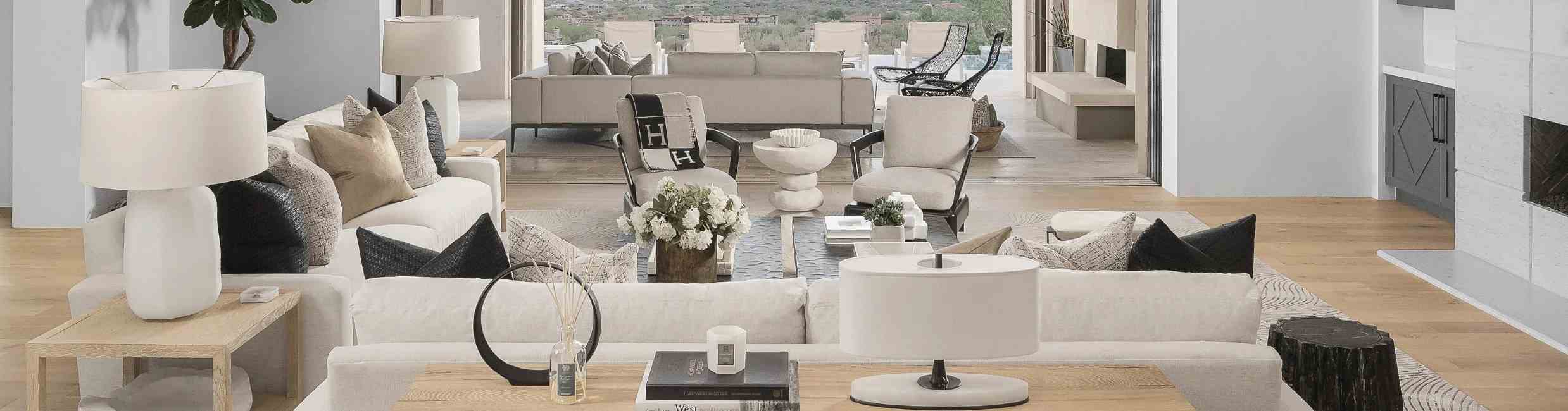
For example, a ceiling light can set the general tone, while wall lights add warmth at eye level and soften the corners. A table lamp brings light down to where people actually sit, and a floor lamp fills the vertical space with a soft, low glow that a ceiling light alone could never achieve.
If a room still feels flat after that, the answer is almost always adding another source at a different height, one that draws the eye through the space and gives it a depth it didn't have before.
It’s not just about adding more light, though. The mix of sources matters as much as the number of them. A room lit only by bright, direct light feels harsh, while a room lit only by soft, diffused light feels dim. The sweet spot is a stronger source that anchors the space, with softer lights around it that fill the gaps.
How to Choose the Right Fixture Size and Placement
Choosing the right lighting fixture starts with the room itself. A fixture that works in one space can look completely wrong in another, and scale is usually the first thing to check. The general rule is to match fixture size to both the room size and the furniture it sits alongside.
For instance, a pendant that feels substantial in a large open kitchen can overwhelm a smaller dining space entirely.
Sizing by Room

For dining spaces, a fixture width of roughly half to two-thirds of the table width tends to sit in the right proportion. In a living room, the focal fixture works best at around two-thirds the width of the coffee table beneath it as a starting point, though adjusting for ceiling height and room depth is always worth doing.
Hallways are worth treating carefully. A large chandelier needs enough clearance from the floor to feel generous rather than obstructive. A reasonable guideline is around seven feet of clearance from the floor to the bottom of the fixture, though the right figure will always depend on the ceiling height and the scale of the space.
Layering Around a Focal Point

The most effective lighting designs start with one focal fixture and build outward from there. The focal light anchors the room and sets the tone, while supporting layers of wall lights, table lamps, and floor lamps fill in the depth and warmth around it. Trying to make every fixture carry equal weight tends to produce a room that feels busy rather than coordinated.
For pendant lighting over a kitchen island, even spacing matters. Unevenly placed pendants draw attention to the irregularity rather than the island itself, which is rarely the intention.
Ceiling Height

Ceiling height has a major bearing on pendant drops and chandeliers in particular. In a room with low ceilings, a long drop pendant or a chandelier with significant height will feel cramped and out of proportion.
Flush mounts or wall lights are a better fit in those spaces, providing the same type of lighting without competing with the architecture.
Which Materials and Finishes Make Lighting Feel High-End?

More often than not, it is the material and finish of a fixture that determines whether it feels high-end, not the category it belongs to.
The materials that do this best share one quality: they interact with light in a way that cheaper alternatives simply cannot replicate, and produce a glow, a warmth, or a depth that changes how the whole room feels:
- Alabaster: A natural stone that produces a warm, diffused glow rather than a sharp beam, making any space feel more intimate and inviting. See our Alabaster collection for inspiration.
- Aged brass and bronze: Metal finishes that absorb and reflect light with a depth that polished alternatives can't match. Grows richer and more characterful with age.
- Hand-finished ceramic: The slight variations in glaze and surface texture mean that no two pieces are exactly alike, giving each fixture a character that machine-made options can’t match.
- Mouth-blown glass: The appearance shifts with the light behind it, so the same pendant can look entirely different from morning to evening.
Whichever materials you choose, consistency matters. Mixing too many finishes across a home makes even beautiful fixtures feel awkward and uncoordinated. Pick one or two to rely on overall.
What Lighting Trends Are Shaping Luxury Homes Right Now?
The trends shaping luxury home lighting right now are sculptural fixtures, more relaxed placements, smart lighting controls, and a growing preference for fixtures made by hand rather than by machine.
What connects all of them is a move away from the perfectly uniform and mass-produced fixtures, driven by homeowners and designers who want spaces that feel personal rather than generic.
Sculptural Form and Handcrafted Finish

Standard pendants are giving way to pieces with curved arms, irregular forms, and hand-shaped details worth looking at even when switched off.
For anyone furnishing a home with longevity in mind, the finishes behind this trend are what make the difference: uneven glazes, brass shaped rather than stamped, and glass that looks different depending on where you stand. These are the details that separate a handcrafted piece from a factory-made one.
Asymmetrical Placement and Smart Controls
Fixtures are being hung at varying heights rather than evenly spaced, creating a more relaxed, less rigid feel that suits homes designed for comfort rather than show.
Additionally, smart controls are letting rooms shift from bright and practical to warm and low without changing a single bulb. And in most well-designed homes, that kind of flexibility has become a baseline expectation rather than an added feature.
Common Mistakes That Make Luxury Lighting Look Cheap
Even with the best intentions, a few common missteps can undermine an otherwise well-designed space. Luckily, most of them are easy to fix once you know what to look for:
- Using one ceiling light only: A single overhead source flattens a room regardless of how well-designed the fixture is. Remember, one light source is rarely enough to make a space feel warm or complete.
- Picking fixtures that are too small: An undersized fixture gets lost in a room and makes the whole lighting plan feel like an afterthought. When in doubt, size up.
- Ignoring dimmers: A room that can only be fully bright or fully dark has no range. Dimmers are one of the lowest-cost, highest-impact decisions in any lighting plan.
- Mixing too many finishes: One or two finish tones feel deliberate. Three or more make a room look unplanned. Keep finishes consistent throughout a room.
- Placing lights at the wrong height: A pendant hung too high loses its presence. A floor lamp tucked behind a sofa contributes nothing. Position determines whether a fixture does its job or simply takes up space.
Also, if a room feels a bit too harsh or glaring, the culprit is usually exposed bulbs sitting at eye level. Switching them out for shaded lamps is often all it takes to bring the glare under control and make the room feel more comfortable.
Conclusion
Getting luxury home lighting right is less complicated than most people think. It comes down to understanding what each lighting decision does and making sure all the elements work together. That is what separates a space that looks well-decorated from one that actually feels worth coming home to.
If you are looking for lighting that embodies all of that, browse the RENG collection to discover handcrafted Italian pieces designed to feel at home in a well-lit room for years to come.