2026 Lighting Trends Designers Are Loving Right Now
Lighting is playing a bigger role in how homes look and feel. As interiors become more personal, lighting is no longer an afterthought, but part of the overall design from the very beginning.
So, what are the 2026 lighting trends shaping modern homes?
The top lighting trends in 2026 include sculptural fixtures with softer forms, warmer layered ambient lighting, natural materials like ceramic and wood, muted metal finishes, and flexible layouts that adapt throughout the day.
Read on to see how these trends are shaping homes and influencing the way spaces are designed.
How Lighting Styles Are Evolving in 2026
This year, the focus has shifted toward how light works throughout a space, not just which fixture hangs from the ceiling. Here are the styles influencing homes right now.
Sculptural and Statement Lighting Fixtures

Sculptural lighting remains an important part of 2026 lighting trends, especially in spaces that need a natural focal point.
These fixtures are less about being flashy and more about adding shape, texture, and quiet visual interest.
You’ll see sculptural pendants and chandeliers placed over dining tables, kitchen islands, and entryways where they draw attention without dominating the area.
Many designs feature curved forms, hand-shaped details, or subtle asymmetry, which makes them feel more approachable than traditional statement pieces.
Soft, Warm Ambient Lighting Takes Center Stage
A major shift this year is the move toward softer, warmer ambient light.
Bright overhead lighting is being replaced with light that feels easier on the eyes and more comfortable to live with from morning to night.
Diffused shades, indirect lighting, and warmer color temperatures create a gentle glow instead of harsh brightness.
Ambient light is layered through ceiling fixtures, wall sconces, and lamps, so the room feels evenly lit without feeling flat.
If a space feels relaxed the moment you walk in, ambient lighting is likely doing the heavy lifting.
Layered Lighting for Everyday Living
More homes are moving away from single light sources and toward layered lighting.
Instead of relying on one overhead fixture, rooms now combine multiple light sources that work together.
General lighting fills the room and sets the foundation. Task lighting gives you brighter, focused light where you need it most. Accent lighting draws attention to shelves, artwork, or architectural details.
When all three are used together, the room feels layered instead of flat. It also makes mood lighting possible, so the same space can shift from bright and practical during the day to softer and more relaxed in the evening.
This approach adds flexibility without changing the layout, because you’re simply adjusting how the light is used.
Materials & Finishes Leading the 2026 Lighting Scene
Materials and finishes are playing a bigger role in lighting design this year, influencing not just appearance but how a space feels.
Natural and Organic Materials in Lighting

Natural and organic materials are playing a major role in the current lighting trends.
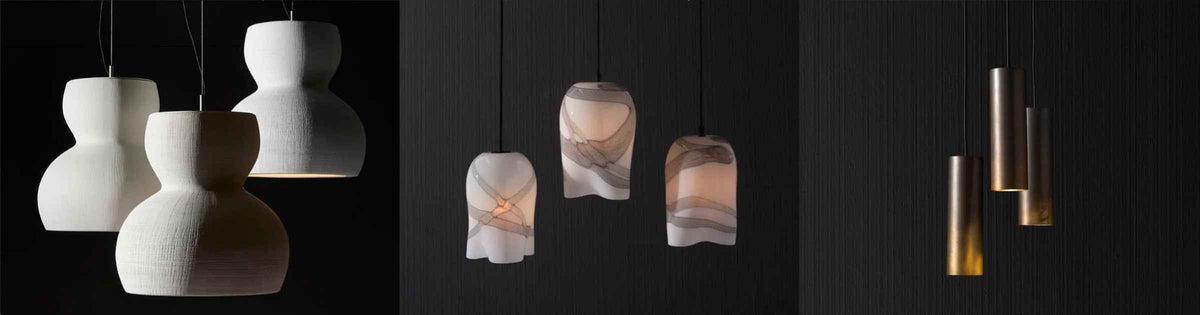
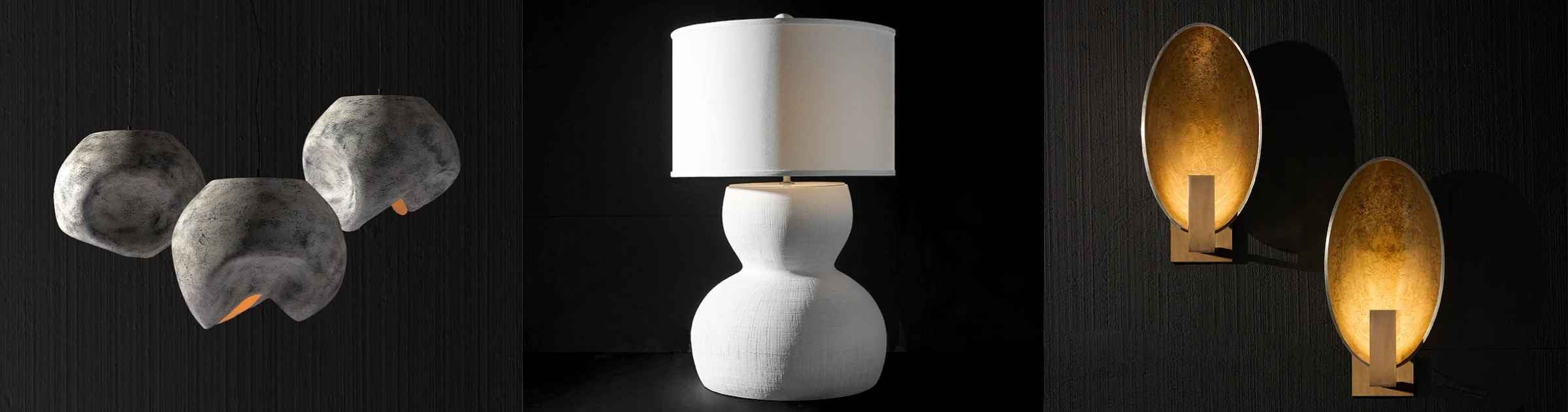
More fixtures are being made from wood, ceramic, stone, linen, rattan, and hand-blown glass, bringing texture without feeling heavy.
If your home leans modern, these materials help soften the harder lines and smooth surfaces. A ceramic pendant or linen shade adds just enough character so the lighting blends in naturally instead of standing out for the wrong reasons.
Because natural materials vary slightly in color and texture, each piece ends up a little different. That subtle variation gives the lighting personality instead of making it look identical to everything else.
Soft Metal Finishes and Mixed Metals

Metal finishes are still widely used, but instead of bold, glossy looks, top designers are leaning toward softer and more subtle options.
High shine chrome is being replaced by brushed brass, aged bronze, matte black, and muted nickel. These finishes mix in more easily and don’t compete with the rest of the room.
The Buki suspension light is a strong example of this shift. Its darker, more restrained metal finish feels intentional without dominating the room, allowing the form of the fixture to stand out instead of the shine.
Mixed metals are becoming more common, as tones are combined to create contrast and balance while keeping the overall lighting cohesive instead of perfectly matched.
Textured Shades and Handcrafted Details
Texture is becoming an important part of modern lighting design trends.
Woven shades, hand-formed ceramic bases, seeded or hand-blown glass, and fabric shades break up smooth surfaces and add dimension.
Texture also changes how ambient light spreads throughout a room. Instead of casting a sharp beam, textured materials diffuse light and create a softer glow that adds depth, especially in living areas and dining rooms.
Handcrafted elements add character to lighting, and those small imperfections keep it from feeling mass-produced while making each piece feel more personal.
Using Lighting to Shape a Room
Beyond specific fixtures and finishes, lighting trends are shaped by how lighting is used throughout a space. Here are a few ways it can change the feel of a room.
Creating Depth with Layered Lighting

Layered lighting is one of the most effective ways to add dimension to a room.
When a space relies on only one light source, it can feel unfinished. Combining ambient, task, and accent lighting fills in those gaps.
Ambient light fills the room and sets the base level of brightness.
Task lighting gives you focused light where you actually need it, like over a counter or next to a chair.
Accent lighting adds depth by highlighting shelves, artwork, or architectural details.
When these layers work together, a room becomes more balanced. You can brighten it when you need focus, then soften it in the evening without changing the layout.
Flexible and Customizable Lighting Layouts

Because homes are used for many different activities throughout the day, lighting needs to adapt to those changes.
To make that possible, consider customizable layouts that include dimmers, separate switch zones, and fixtures that can be repositioned.
Movable fixtures like wall sconces and contemporary table lamps give you more control over how light is distributed, so the room can shift from functional to relaxed without being too bright.
Integrating Lighting with Color and Mood Trends
Lighting does more than just brighten a room. The color temperature of a bulb, along with the shade and finish of a fixture, can completely change how colors and textures look.
Warmer light gives off a softer, slightly yellow glow that makes paint colors and materials look calmer and less intense.
Cooler light appears brighter and whiter, which makes edges, textures, and details stand out more clearly.
Many designers are choosing contemporary lighting that supports a relaxed atmosphere rather than overpowering the room.
Paying attention to how lighting affects color and texture can change the feel of a room without needing a full redesign.
Room-By-Room Lighting Trends for 2026
One of the easiest ways to understand lighting today is to look at how it works in each space. Here is how 2026 lighting trends are used in each room.
Lighting Trends for Dining Rooms and Living Areas

In dining rooms and living areas, lighting is focused on creating comfort without making the interior too bright.
These are rooms where people gather and spend time, so the light needs to adjust with the moment.
Start with the main light over your seating area, then build around it. Adding a few other light sources throughout the room keeps everything from feeling flat or too intense.
When choosing lighting for kitchen islands, aim for something balanced.
The Maru kitchen island light is one example of this softer approach, with its rounded glass form and warm brass detail.
In living rooms, think about how you actually use the room. You might prefer a softer light near the couch and something more focused for reading.
A little extra light on shelves or artwork can add depth without making the room busy.
Kitchen Lighting That Goes Beyond Cooking

The kitchen isn’t just for cooking anymore, and the lighting reflects that. It still needs to support cooking and prep, but it also shapes the atmosphere once everyone sits down.
Over counters and sinks, choose lighting that gives you clear, focused light. For islands, look for fixtures that are more sculptural rather than purely practical.
The Alberto pendant is a great example of this, with its glass globe and clean steel detail adding shape without overwhelming the room.
Consider adding under-cabinet lighting to keep work areas bright without relying only on overhead lights.
Bedroom Lighting That Helps You Wind Down

In 2026 lighting trends, bedroom lighting is shifting toward softer tones that support rest in the evening instead of keeping the room too bright.
Rather than using a single bright ceiling light, add a few softer light sources around the room to create more ambient lighting.
Table lamps and wall lights work well, especially when paired with warmer bulbs that give off a softer glow at night.
Using more than one light makes it easier to adjust the setting throughout the day. It can feel brighter in the morning and quieter in the evening without changing anything else in the room.
What’s Falling Out in 2026 Lighting Trends
As lighting preferences change, some choices no longer suit today’s interiors. Here’s what’s starting to fall out in 2026 lighting trends.
Outdated Fixtures and Styles to Avoid
Lighting setups that rely on a single harsh ceiling fixture are starting to feel outdated. When all the light comes from a single source, it can make a room seem flat or overly intense.
Very glossy finishes and heavily decorative fixtures are also being used less. When something is too polished, it can draw attention in a way that looks disconnected from the rest of the room.
Choosing lighting only for how it looks is becoming less common, too. It should catch your eye, but it also needs to work for how you live in the room.
Trends That Are Evolving into New Forms
Some lighting trends aren’t disappearing, they’re evolving into subtler versions of themselves.
Statement lighting is still part of 2026 lighting trends, but it’s not as dramatic as it once was. Instead of trying to dominate a room, these fixtures blend in more naturally while still adding presence.
Metal finishes are shifting as well. High-shine chrome and perfectly matched metals are showing up less, while softer finishes feel more at home in a space. The metal shouldn’t take over the room; it should support it.
The Kamio pendant is a good example of this shift. Its bronze patina is warm, adding depth without pulling focus.
Even traditional fixtures like chandeliers and lamps are being simplified, with cleaner shapes that fit into more spaces without overpowering them.
Designer and Influencer Forecasts for 2026
To understand where lighting is heading, it helps to look at what designers are choosing right now.
Insights from Lighting Exhibitions and Shows

At recent lighting shows, the overall direction is consistent. Softer shapes, sculptural forms, and natural materials show up again and again.
Instead of overly complex fixtures, many displays focus on how light works in a space. Layered setups, warmer tones, and pieces designed to work together are more common than dramatic standalone fixtures.
Materials like hand-blown glass, ceramic, and mixed finishes appear often. The focus isn’t on flashy design, but on lighting that adds atmosphere without taking over the room.
Predictions from Top Interior Designers

Designers are leaning toward balance and flexibility. Rather than creating one dramatic focal point, they’re planning lighting that adapts throughout the day.
There’s also more attention on how light functions in a space. Warmer color temperatures and adjustable brightness help create comfort from morning to night.
Sculptural fixtures are still popular, but they’re being paired with simpler lighting around them to avoid visual clutter.
In the end, the direction is clear. Lighting should look natural, not forced. It should support how you live in the room, not compete with it.
Bringing 2026 Lighting Trends Into Your Home
Lighting is being approached more thoughtfully than ever, with trends reflecting a shift toward spaces that are layered and easy to live in.
Staying current doesn’t mean replacing everything at once. It means understanding which updates will improve how your space functions and feels over time.
If you’re ready to bring these 2026 lighting trends into your home, we offer pieces that follow this same direction.
Explore the collection or contact the RENG team to find lighting that fits naturally into your home.