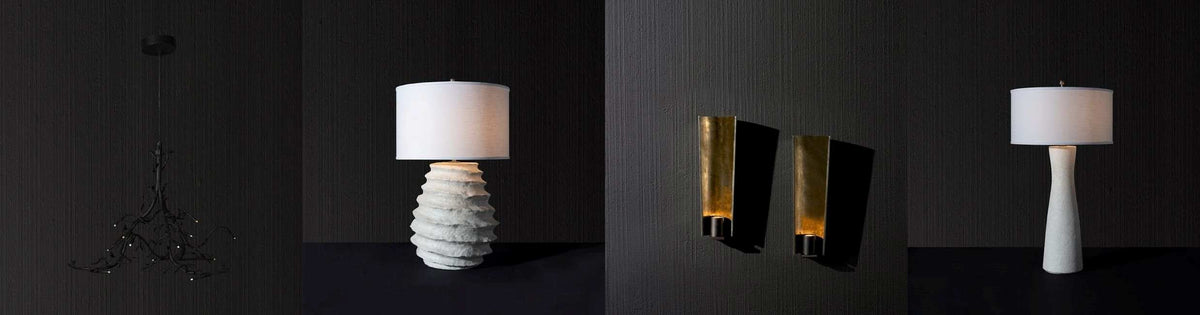
Article: Modern Organic Lighting - A Guide to Sculptural, Earthy Style
Modern Organic Lighting - A Guide to Sculptural, Earthy Style
A room can have clean lines without feeling bare. A ceramic pendant above a wood table or an irregular glass lamp beside a sofa can bring texture and variation into a contemporary interior without requiring a complete redesign.
The key is choosing lighting that works visually when switched off and performs properly when the room is in use.
What Is Modern Organic Lighting?

Modern organic lighting combines contemporary simplicity with natural materials, textured finishes, and nature-inspired forms.
Fixtures often feature ceramic, wood, stone, linen, or glass, with curves and irregular details that soften the straight architectural lines found in many modern interiors.
The appearance of the fixture is only part of the decision. An organic modern light fixture still needs the right scale, placement, bulb, and supporting light sources to work well in everyday use.
What Makes Lighting Organic?
Natural Materials and Visible Texture
Natural materials become more interesting when their texture remains visible.
Wood grain, variation in stone, matte ceramic surfaces, woven fibers, and irregularities in glass can give a fixture character without relying on elaborate decoration.
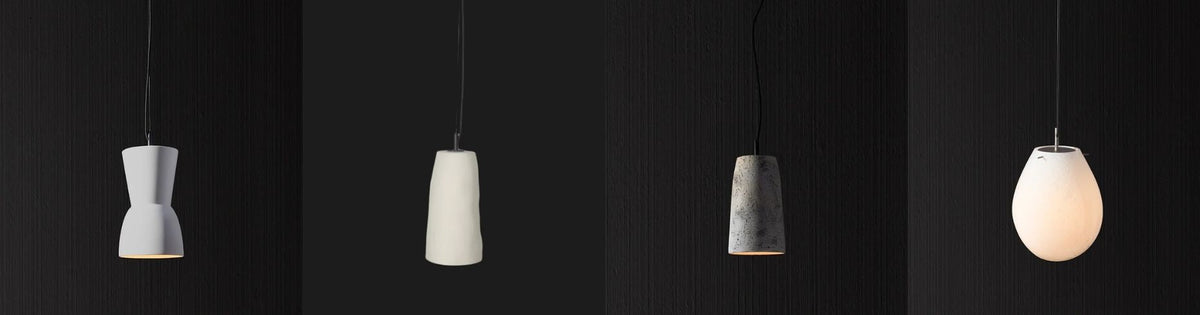
RENG's Ensui Pendant uses ceramic with a matte glaze. Its narrow form works well when you want texture without introducing a wide or visually heavy shade.

The Koishi Pendant takes a different approach, pairing an irregular hand-blown seeded milk-glass body with a pewter metal canopy. Its rounded profile creates contrast beside rectangular furniture, cabinetry, and architectural details.

When choosing organic modern lights, look for a material that relates to something already present in the room. A ceramic pendant can connect with pottery or stone surfaces, while glass can provide contrast beside solid wood furniture.
Soft and Sculptural Shapes
Organic shape lighting takes inspiration from forms that feel less rigid and geometric. Rounded pebbles, uneven curves, branching silhouettes, and softly asymmetrical forms all fit naturally within the style.
Organic sculptural lighting can also act as a focal point, but every fixture does not need to compete for attention.
Choose one stronger sculptural element above a dining table, island, entryway, or seating area, then keep nearby fixtures quieter. This allows the main silhouette to stand out without making the room feel visually crowded.
How to Choose Organic Modern Light Fixtures

Before focusing on individual finishes or shapes, consider five practical questions:
- Does the fixture suit the scale of the furniture and room?
- Would a warm-white bulb around 2700K to 3000K suit the space?
- Would dimming make the lighting more flexible?
- Does the room have enough ambient, task, and accent lighting?
- Have you considered how the fixture and materials look during daylight and after dark?
Consider Scale and Placement
Measure the furniture beneath a fixture, not only the room itself.
Compare the fixture's width and body height with the dining table, kitchen island, nightstand, or other surface below it. Check minimum and maximum hanging lengths before ordering as well.
For a dining table, a fixture measuring roughly one-half to two-thirds of the table's width can provide a useful starting point. The right proportion still depends on visual weight. An open metal frame will appear lighter than a solid ceramic or glass fixture of the same dimensions.
Before installation, a paper template or cardboard silhouette can help you judge the fixture's size from the doorway and from a seated position.
Focus on Lighting Quality
A warm-white range of roughly 2700K to 3000K is a practical starting point for many modern organic interiors.
Test the light beside your paint, upholstery, wood, stone, and other finishes before selecting bulbs for the entire room. The same surface can look different under daylight, warm artificial light, and cooler sources.
Warm light should not be confused with dim light.
Kelvin describes the color appearance of the light, while lumens describe light output. A room can have a warm atmosphere while still providing enough illumination for reading, cooking, or other tasks.
For rooms used differently throughout the day, dimmable lighting can provide more control. Check that the selected bulbs and dimmer are compatible before installation.
Layer Light and Account for Daylight
One decorative fixture rarely needs to handle every lighting task in a room.
Combine:
- Ambient lighting for general visibility
- Task lighting for activities such as reading or food preparation
- Accent lighting for artwork, shelving, or architectural details
A pendant above a dining table may define the space beautifully, but it does not automatically provide enough light for nearby countertops or work surfaces.
Daylight should also be part of the lighting plan.
Review the room in the morning, afternoon, and evening. Areas that receive plenty of natural light during the day may still require table lamps, floor lamps, sconces, or other fixtures after sunset.
Planning outlets, switches, and ceiling connections early also gives you more freedom when deciding where furniture and lighting will sit.
How to Use Modern Organic Lighting by Room

Living Room
Living rooms usually benefit from several light sources positioned at different heights.
A table lamp beside the sofa can provide localized light, while a floor lamp near a reading chair can cover a different activity or part of the room. Ceiling lighting can then provide broader ambient illumination.
Check the fixture from your normal seated position. The shade should limit direct glare from the bulb while still allowing useful light into the surrounding space.
Also keep lamp bases and cords away from main walking routes.
Organic modern lighting works particularly well in living rooms because materials such as ceramic, glass, wood, and linen can relate naturally to furniture, textiles, artwork, and decorative objects already present in the space.
Kitchen and Dining Room
Pendants can define a kitchen island or dining table while introducing shape and material into an otherwise functional area.
For kitchens, decorative pendants should be supported by task lighting where food is prepared. Under-cabinet fixtures can illuminate work surfaces that pendants do not reach effectively.
Above a dining table, roughly 30 to 36 inches between the tabletop and the bottom of the fixture is a common starting point. Ceiling height, fixture proportions, and sightlines can all justify adjusting that distance.
When using several pendants above an island, compare their combined width with the size of the island and leave enough space between fixtures for each silhouette to remain visible.
This is also an area where organic modern light fixtures can create useful contrast. Rounded ceramic or glass forms can soften kitchens dominated by cabinetry, countertops, and straight horizontal lines.
Bedroom
Bedroom lighting should respond to what actually happens beside the bed.
If you read at night, prioritize a fixture that directs useful light toward the page. If the bedside light is mainly used for general evening illumination, a shaded lamp with softer diffusion may be more suitable.
Wall-mounted fixtures can be useful where nightstands are narrow because they leave more surface space available.
Think about switch placement as well. Bedside lighting is more practical when it can be controlled without getting out of bed.
Organic modern lights can work particularly well here because softer silhouettes and tactile materials fit naturally with bedding, upholstery, wood furniture, and other quieter bedroom finishes.
Entryway
An entryway is often a good place for one sculptural fixture.
A pendant or chandelier can become the visual focus in a taller space, while a lower ceiling may call for a fixture positioned closer to the ceiling.
Keep the fixture clear of door swings, walking paths, and areas where people regularly pass underneath it.
Where there is a console table, a lamp can introduce ceramic, glass, stone, or another textured material without requiring a hanging fixture.
Because the entryway introduces the rest of the home, a single organic sculptural lighting piece can establish the material and design language used in nearby rooms.
Modern Organic Lighting FAQs
What Is Organic Modern Style?
Organic modern style combines uncluttered contemporary interiors with natural textures, softer shapes, and earthy materials.
A room might pair a simple sofa with a wood table, woven textiles, ceramic lighting, stone surfaces, and a restrained color palette.
The interest comes largely from texture, material variation, and form rather than elaborate ornament.
Can You Mix Organic Modern Lighting With Metal Finishes?
Yes.
Metal details can work well beside ceramic, wood, glass, stone, and other natural-looking materials.
The combination usually feels more deliberate when a metal finish appears elsewhere in the room, such as on furniture, cabinet hardware, plumbing fixtures, or decorative objects.
RENG's Koishi Pendant demonstrates this type of pairing by combining a glass body with a pewter metal canopy.
Does Modern Organic Lighting Work in Small Rooms?
Yes.
Choose an organic modern light fixture based on proportion, clearance, and the way the room is used rather than assuming every small space requires the smallest possible fixture.
A compact pendant above a table or a wall-mounted fixture beside a bed can introduce the style without taking up floor space.
At the same time, one larger statement fixture can sometimes work well in a smaller room when there is enough physical clearance and the rest of the space remains visually restrained.
Do Natural Materials Always Produce Soft Light?
No.
Light distribution depends heavily on shade construction and opacity, not simply on whether the material is natural.
An opaque ceramic shade may direct most of its light through its openings, while translucent glass or fabric can allow more light through the surface itself.
When choosing a fixture, look at photographs showing it switched on and consider whether its light pattern suits the way the room will be used.
The RENG Approach to Modern Organic Lighting
RENG's collection is designed by Brendan Bass and produced by small family-run factories and workshops throughout Italy.
The collection brings together sculptural forms, distinctive materials, and fixtures designed to function as part of the room rather than simply as decorative objects.
Start with the area where your current lighting works least effectively. Decide what type of light the space needs, then choose the material, scale, and shape that fit the room.
Browse RENG's pendant lights, table lamps, and floor lamps to find modern organic lighting suited to your space.