Bespoke Lighting Design - A Guide for Luxury Homes
Most luxury homes get furnished down to the last cushion, but the lighting tends to go wherever the wiring already is. The best rooms work the other way around, with light shaped around the space, rather than squeezed into it. That's the idea behind bespoke lighting design.
Basically, bespoke lighting design is the process of tailoring a room's lighting to its specific size, architecture, mood, and use, instead of picking a standard fixture off the shelf. It can mean a fully custom fixture, a tailored arrangement of existing pieces, or a lighting plan built for one space.
Bespoke lighting is essential for designing a home that truly looks luxurious and it's easy to get wrong. Luckily, the sections below cover how the process works, which materials and specs matter most, what it costs, and how to find the right partner for your project.
Key takeaways:
-
Bespoke lighting is planned around the room, not merely pulled off a shelf.
-
Good lighting works in layers: ambient, task, accent, and decorative.
-
Three specs matter most: color temperature, color rendering index (CRI), and dimming.
-
Material sets the mood. Alabaster, glass, crystal, ceramic, and metal each do something different.
-
Cost depends on the fixture, materials, customization, and install, so there's no single price.
What is bespoke lighting design?

At its simplest, bespoke lighting design is a room-specific strategy. Instead of picking a fixture and hoping it fits, you plan the light around one space, including its size, ceiling height, how the room gets used, and where you want the eyes to go.
A bespoke project might be one fully custom fixture, a tailored mix of designer lighting fixtures, or a written spec for a whole home. The range of luxury lighting ideas is wide, so having a clear sense of the room's purpose and mood before the planning begins makes the whole process easier.
How does bespoke lighting design work?
Bespoke lighting design works in three stages: gather the room's details, plan the light in layers, then settle the specifics of each fixture.
What should you prepare before a lighting consultation?
Essentially, the more a designer knows about the room upfront, the better the plan.
So, start with hard numbers, such as room dimensions, ceiling height, and the size of any table, island, or furniture the light will hang above. Additionally, photos, floor plans, and a few inspiration images can help just as much.
Only afterward do you think about the feeling of the room.
For example, what mood are you after: soft and romantic, dramatic, sculptural, or simply functional? And how does the room actually get used, whether that's quiet reading, cooking, entertaining, or setting a hospitality atmosphere?
The clearer you are on both upfront, the less guesswork later.
How are lighting layers planned?
Good bespoke lighting is planned in four layers, not built around a single fixture doing all the work:
-
Ambient light provides general illumination for the room.
-
Task light supports specific activities like cooking or reading.
-
Accent light draws attention to features worth showing off.
-
Decorative light is the fourth layer, where the fixture itself is the point.
Most rooms need all four to feel complete.
A dining room, for example, might use ambient light for general warmth, a pendant over the table as the decorative anchor, accent light on a piece of art or an architectural detail, and a lamp or sconce nearby for softer task light when needed.
How are custom details finalized?
Once the layers are mapped, each fixture gets specified. That means settling the look first: the fixture type, material, and finish. Then the fit: size, quantity, drop length, and canopy shape for anything hanging.
Last are the practical calls, how the lighting dims and switches, and what the electrician will need on site.
What lighting specifications matter in bespoke lighting design?

Color temperature, CRI (Color Rendering Index), and dimming are the three specs that matter most in bespoke lighting. They determine how warm the light reads, how true the colors and materials look, and how much control you have over the room's atmosphere.
What color temperature is best for luxury interiors?
Color temperature is how warm or cool a light source reads, measured in Kelvin. Lower numbers burn warmer, higher numbers run cooler.
It matters because warm light is more flattering to skin tones, clothing, and natural materials, and it's what gives a room that pulled-together, inviting quality that's hard to put your finger on but easy to feel.
For luxury bedrooms, dining rooms, and hospitality spaces, ask for 2700–3000K. That's the range most designers land in, and it's a good starting point for any conversation with a lighting partner.
What CRI should luxury lighting have?
CRI measures how accurately a light source renders color, on a scale of 1 to 100.
Think of it this way: a low-CRI bulb is like looking at a painting under bad gallery lighting. The colors are there, but they're duller, flatter, and less true than they should be.
For residential applications, 80 is generally considered the acceptable floor. For luxury interiors, it's worth going higher. Stone, wood, fabric, and artwork all look better under a high-CRI source, and if the finishes and materials in a room are part of what you're paying for, the light showing them off should be too.
Should bespoke lighting include dimmers and controls?
Yes, and the reason is simpler than it sounds. A dimmer lets one room shift from bright and functional during the day to warm and atmospheric in the evening, without changing a single fixture. It's one of the most practical decisions in a well-designed space.
The one thing worth confirming upfront is LED compatibility, since not every dimmer works cleanly with every LED driver. Small detail, but much easier to sort before installation than after.
What materials and fixture types are best for bespoke lighting?

Alabaster
Alabaster is a natural stone, and light passes through it differently because of that. It’s soft and warm, with a slight variation in tone that no manufactured material quite replicates.
It works best in rooms where the goal is intimacy, like dining rooms, bedrooms, and entry moments where you want a glow rather than a glare. Our Surimu and Tanjun are good examples of how alabaster handles both pendant and hanging formats without losing that quality.
Glass and crystal
Glass and crystal come from the same family but do different things.
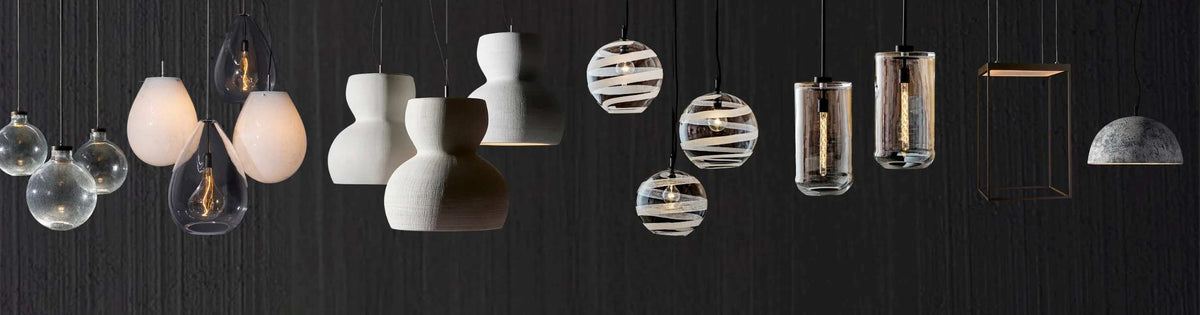
Handblown glass feels airy and open, adding visual presence without closing the room down. Crystal goes further: it refracts and sparkles, and carries a formal luxury that suits dining rooms, foyers, and hotel lobbies.
Both work well for statement installations where the light itself is meant to be noticed.
Ceramic and metal
Ceramic doesn't have one defining quality the way glass or crystal does. What it does have is a hand-formed softness, slight texture variation, and a warmth that sits naturally in interiors built around wood, stone, and organic shapes.
Metal, on the other hand, is easier to define. It adds structure, shadow, and contrast, and a burnished or forged piece grounds a wall the way a well-chosen piece of furniture grounds a floor. Between the two, it’s ceramic for warmth and craft, or metal for weight and form.
Which fixture types should a bespoke plan include?
A complete bespoke plan typically draws from five fixture types, each doing a different job in the room:
-
Pendant lights and chandeliers for overhead anchors and statement moments.
-
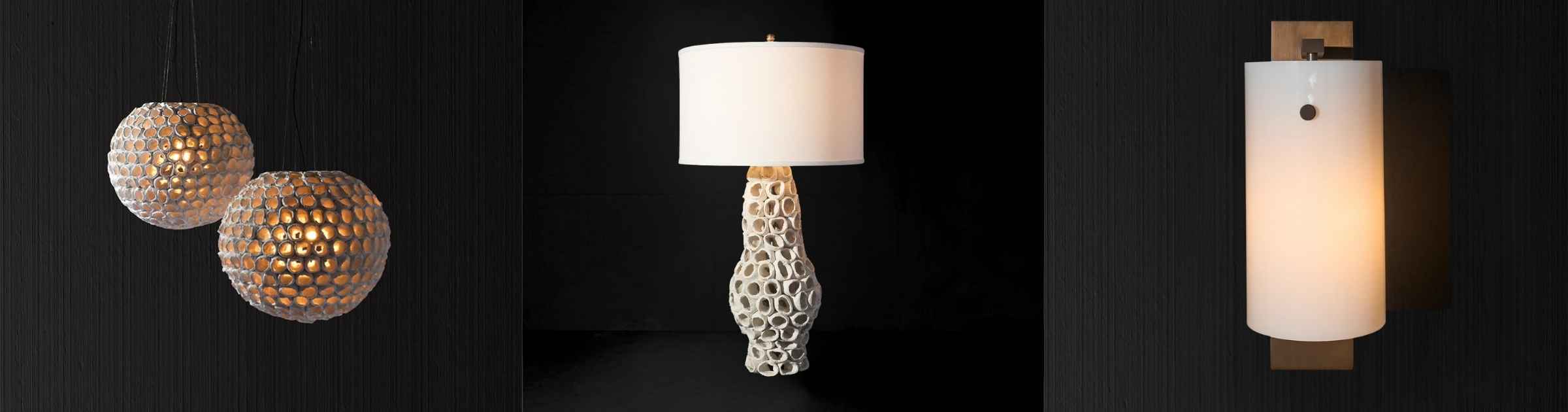
Wall sconces for warmth at eye level and to light the vertical surfaces.
-
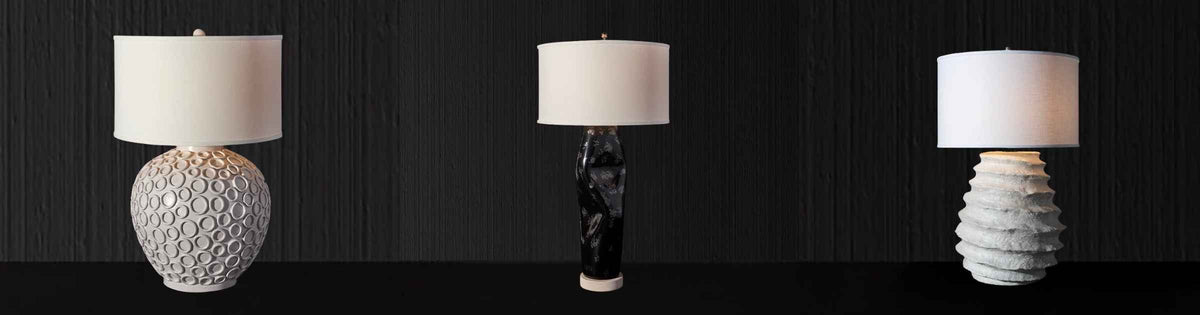
Table and floor lamps to bring light down to where people actually are.
-
Multi-pendant canopies for islands, long tables, and grouped installations.
-
Accent lights to highlight art, stone, or architectural details worth showing off.
Not every room needs all five, but most well-lit spaces use at least three. The bigger mistake, however, isn't choosing the wrong fixture, but relying on too few of them and expecting one or two pieces to carry the whole room.
Bespoke lighting vs off-the-shelf lighting: which is better?
For most luxury projects, bespoke lighting is the better choice, but the honest answer is that it depends on what the room actually needs.
Off-the-shelf lighting works when the goal is basic illumination, the budget is tight, or the space doesn't carry much design weight. A utility room, a rental, a secondary bedroom, these areas don't need a lighting plan. They just need a fixture that works.
Bespoke is a different conversation.
When the room has architecture worth honoring, proportions that a standard fixture won't fit, or a mood that depends on getting the light exactly right, off-the-shelf rarely delivers. The fixture might be beautiful on its own, yet still feel wrong in the space, too small, too bright, disconnected from everything around it.
In reality, most luxury projects land somewhere in between.
A semi-custom arrangement, where existing pieces are specified, scaled, and layered for one room, gives you most of what a fully bespoke plan offers without the lead time or cost of designing from scratch. For a lot of high-end residential and hospitality work, that's the right answer.
How much does bespoke lighting design cost?
Bespoke lighting design works in three stages: gather the room’s details, plan the light in layers, then settle the specifics of each fixture.
In high-end lighting design, the best results usually come from treating the lighting plan as part of the interior from the beginning, not as a final decorative choice.
A useful way to think about cost is to separate the budget into four parts: design, fixtures, customization, and installation.
|
Cost area |
Typical planning range |
What affects the price |
|
Lighting design or specification |
$500 to $12,000+ |
Single room vs whole home, technical drawings, room count, controls, and project complexity |
|
High-end or custom fixtures |
$600 to $5,000+ per fixture |
Material, size, finish, handmade details, LED package, and brand |
|
Bespoke chandeliers or statement installations |
$4,000 to $12,000+ |
Scale, material, number of lights, custom canopy work, drop length, and engineering needs |
|
Professional installation |
$350 to $1,250+ for many standard installs |
Ceiling height, fixture weight, wiring, access, reinforcement, and dimmer setup |
|
Complex installation |
$1,500 to $3,000+ |
Two-story spaces, heavy fixtures, new wiring, ceiling reinforcement, lifts, or scaffold access |
Several factors matter most:
Material: Alabaster, crystal, and handblown glass usually sit at the higher end. Ceramic and metal vary widely depending on the finish, shape, and workshop process.
Fixture type: A single pendant, a wall sconce, a large chandelier, and a multi-light canopy are different levels of work.
Custom details: Non-standard hanging heights, sloped ceiling hardware, canopy changes, and grouped pendant layouts can add to the quote.
Technical package: Integrated LEDs, dimming compatibility, drivers, and lighting controls need to be planned before installation.
Installation: Ceiling height, reinforcement, wiring location, and switch setup affect what your electrician will charge.
Shipping and timeline: In-stock pieces ship differently from fixtures built to a custom height or canopy specification.
The best starting point is a clear room spec and an honest conversation with your lighting partner.
Share the room dimensions, ceiling height, photos, plans, preferred mood, and any installation constraints early.
That gives your partner enough information to recommend the right fixture, the right scale, and a realistic budget before anything is ordered.
How do you choose a bespoke lighting design partner?
Look for two things: how open they are about their craft, and how well they support the project from start to finish.
A good partner is specific about where and how their lighting is made, naming the workshops, the materials, the process, rather than leaning on words like "artisan" without anything behind them. That kind of openness tends to carry through the whole project.
From there, think about support. Can they help with custom hanging heights or canopy arrangements for your ceiling? Do they have people you can actually talk to? Can you see the pieces in person before committing? Those are the things that separate a smooth project from a frustrating one.
Our collections, for example, are made in small Italian workshops and independently safety certified. You can also see them in person at our showrooms in Dallas, Atlanta, Washington DC, and Minneapolis before committing to anything.
FAQ
Is bespoke lighting worth it?
For luxury homes, hospitality spaces, and any room where lighting carries real design weight, yes. The most common mistakes in lighting, fixtures that are too small, too bright, poorly placed, or disconnected from the room's design, almost always come from treating lighting as an afterthought. Bespoke planning avoids those by building the light around the space from the start.
Can RENG customize fixture height, finish, or size?
We can assist with custom hanging heights and canopy arrangements. Finish and body size are generally fixed, since the pieces are handmade in Italy and the design isn't changed after production. The exception is larger projects: purchasing more than 15 pieces of a single fixture style opens up additional options. Contact us directly to discuss what's possible.
How long does bespoke lighting take?
It depends on the scope. In-stock pieces ship within five business days. Out-of-stock items carry a lead time of four to six months. Custom hanging height or canopy work generally runs four to eight weeks after details are received and approved. Larger modifications can require considerably more time.
Do I need an electrician for bespoke lighting?
Yes. We recommend a licensed electrician for all installations, especially for integrated LED fixtures, heavy pendants, custom canopy work, or complex dimming setups. It's the safest way to make sure the install matches the spec you planned.
The right light is what luxury actually feels like

Bespoke lighting design is about more than finding a beautiful fixture. It's the process of aligning light, material, scale, and placement so a room feels luxurious from the moment you walk in. The fixture is just the start. How it's planned, placed, and layered is what does the real work.
Ready to start your own luxury lighting project? Explore RENG's artisan lighting collections or contact the team to begin planning a lighting arrangement built around your space.