Architectural Lighting for Homes in 2026
In most homes, lighting never gets planned around the architecture. Fixtures get picked after the walls are painted and dropped wherever the electrical happens to be, leaving homes with lighting that feels flat and generic. However, architectural lighting works the other way around:
Architectural lighting means planning the light as part of the room instead of adding it on top later. For example, designing your home so that a glow spills out from under your kitchen cabinets, or the light along a staircase that guides your feet without a single visible bulb. This kind of lighting becomes part of how the room actually functions.
So today, we'll get into how it differs from decorative lighting, which techniques work best in a home, and how to plan a scheme room by room.
Key takeaways:
- Architectural lighting is literally built into a room, like a strip hidden under a shelf. Decorative lighting is an external object, like a lamp.
- Recessed lights, cove lighting, and LED strips are the main tools for architectural lighting.
- More homes in 2026 build light directly into ceilings and cabinets instead of adding it after the fact.
- Warm, adjustable LEDs and smart controls change how a room feels all day, with no bulb-swapping required.
- Plan around how you'll use each room first, and pick your fixtures second.
What Is Architectural Lighting for Homes?

Architectural lighting is light that's planned and built into a room instead of added after the fact. You work it out before the walls even close up, so you might hide a strip of light under a cabinet or cut a channel into the ceiling for it. By the time the room is finished, the light is already part of it.
This is unlike normal lighting, where you buy a fixture and plug it in or hang it up wherever it looks good. Architectural lighting works differently because it gets decided in advance, which lets you plan out what happens to a wall, a stair, or a shelf once the light actually hits it.
For example, for a wall, that might mean grazing it with light to bring out its texture. Or, for a stair, it might mean running a hidden strip of light along the edge instead of hanging a fixture above it. In short, a lamp is something you add to a room, while architectural lighting is something you build into it.
Architectural Lighting vs. Decorative Lighting: What's the Difference?
Architectural lighting shapes the room itself, built into the ceiling, walls, or stairs so it works in the background. Decorative lighting, however, is the opposite: it's a visible object meant to be noticed the moment you walk into the room.
Here's how the two compare side by side:
|
Architectural Lighting |
Decorative Lighting |
|
|
Primary role |
Shapes or supports the space |
Adds a visible design focal point |
|
Typical examples |
Recessed, cove, linear LED, wall washing |
Pendants, chandeliers, sconces, lamps |
|
Best for |
Architecture, surfaces, circulation, tasks |
Personality, material, form, focal points |
|
Visibility |
Often discreet or concealed |
Usually intentionally visible |
Typically, you'll need both lighting types. A room lit only with architectural lighting can end up subtle to the point of feeling bare, with no single thing to look at. A room lit only with decorative fixtures, on the other hand, can end up unevenly lit, with bright spots around the pretty pieces and shadows everywhere else.
What Types of Architectural Lighting Work Best in Homes?

Four techniques cover most of what a home needs: recessed lighting, cove and indirect lighting, linear LED lighting, and wall washing or grazing. Each one suits a different surface or feature, and knowing which to reach for matters more than picking a specific fixture:
- When should you use recessed lighting? Use it for general room brightness with a grid of identical downlights, or for focused highlights with a single directional fixture aimed at a piece of art, a textured wall, or a kitchen counter. Placement and glare control matter just as much here, since a downlight aimed without any thought to where people actually sit tends to create glare instead of a soft highlight.
- When does cove and indirect lighting work best? Use it around coffered ceilings, stepped ceiling details, and recessed wall niches, where the architecture already gives you a natural place to hide the light source. The fixture itself gets tucked behind a ceiling ledge, a niche, or a piece of millwork, so what you see is the glow rather than the fixture, producing a softer, more ambient light than a visible fixture ever could.
- When should you use linear LED lighting? Use it on shelving, cabinetry, stair treads, and long ceiling or wall channels, since it follows a continuous line instead of lighting from a single point. A run of linear LED under open shelving does more to define the shelf than a downlight ever could, since the light traces the exact shape of what it's highlighting.
- Wall washing or wall grazing: which should you use? Use wall washing on a flat plaster wall or a piece of art, spreading even light across the full surface to keep things looking clean. Use wall grazing on stone, brick, or any textured material, since placing the light close to the wall catches every ridge and turns the texture into a visual interest.
What Architectural Lighting Trends Matter in 2026?
The biggest trends in 2026 are integrated lighting, layered lighting schemes, and light that adapts throughout the day, with sculptural fixtures still holding their place alongside all three.
Here's why each one is catching on:
Integrated Lighting
More homes in 2026 are hiding the light source instead of showing it off. A good example is a thin LED strip built into a groove along a ceiling or under a shelf, so all you see is a clean line of light instead of a visible bulb or fixture. Builders are installing this kind of lighting during construction, cut directly into the ceiling, wall, or cabinetry, rather than adding a fixture once the room is finished.
The result is a room where the light looks like it belongs to the space itself, rather than something added on top of it.
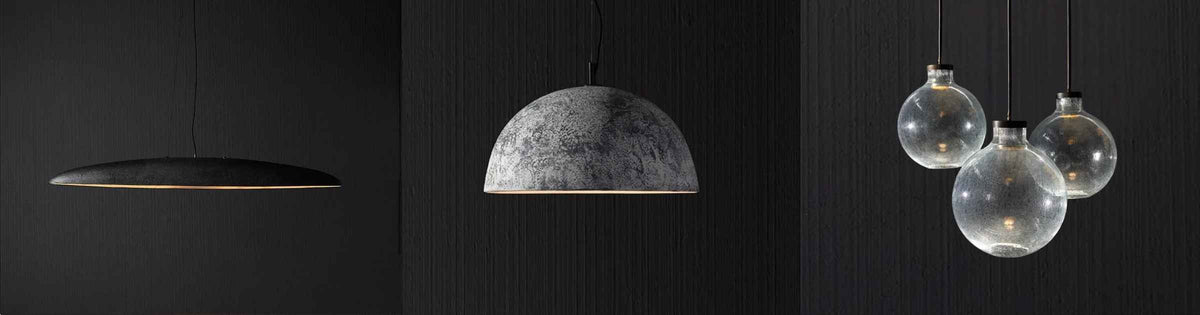
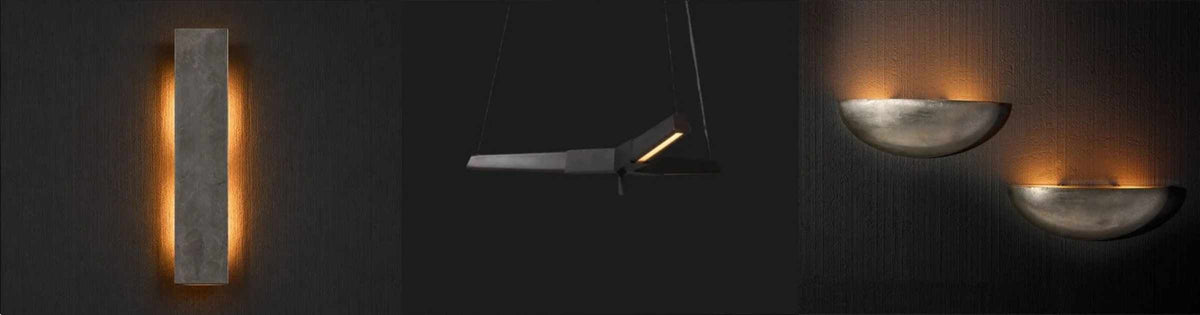
That said, homeowners still want a few fixtures they can actually see—pendants, chandeliers, and wall lights remain popular, especially in natural materials like stone, ceramic, and textured glass. The difference in 2026 is that these visible pieces now share the room with hidden, built-in lighting instead of being the only light source in it.
Layered Lighting
A single light source, however well placed, can't do everything a room needs. Ambient light sets how bright the room feels overall, but it's only one piece of the puzzle.
The rest of the room needs its own layers on top of that. Task light handles counters, desks, and reading spots. Accent light draws attention to art, shelving, or a textured wall. Decorative fixtures add the visible focal point on top of all three. If you skip a layer, the room tends to feel either flat or unevenly lit, no matter how good any single fixture looks on its own.
Adaptive, Tunable Light
Warm, tunable LEDs are gaining ground because a fixed color temperature rarely suits a room all day long. Dim-to-warm and tunable white LEDs let the same fixture shift from a brighter, slightly cooler tone for morning tasks to a warmer, dimmer glow in the evening, without swapping bulbs or running two separate lighting plans for one room.
Smart controls make that easier to manage day-to-day, letting you dim or adjust different fixtures on their own schedule instead of controlling the whole room as one unit.
How Do You Plan Architectural Lighting Room by Room?
Start with each room's activities and features, then pick your fixtures. Every room needs its own mix of architectural lighting (the light built into the space) and decorative lighting (the fixtures you actually see), and that mix changes depending on what the room is used for.
So here's how that mix breaks down room by room.
|
Architectural Layer |
Decorative Layer |
|
|
Living room |
Accent lighting for art, shelving, fireplace |
Statement fixture or wall sconces |
|
Kitchen |
Under-cabinet, recessed, cabinetry lighting |
Island pendants |
|
Dining room |
Dimmable ambient, perimeter wall lighting |
Focal pendant or chandelier |
|
Bedroom |
Cove or concealed headboard lighting |
Bedside and wall-mounted fixtures |
|
Bathroom |
Vanity and accent lighting for tile or niches |
Sconces at the mirror |
|
Hallways/stairs |
Step lighting, linear LED, wall lights |
Artwork accents |
A few things to keep in mind:
Kitchens lean harder on task lighting than any other room, since under-cabinet and recessed lighting have real work to do around prep areas, not just atmosphere to set. Bathrooms need genuinely useful light at the mirror before anything else, and because moisture is involved, fixture ratings and professional installation matter more here than in drier rooms.
And in a hallway or stairway, a run of linear LED along the stair's edge does double duty, guiding your steps while also lighting whatever artwork happens to line the wall.
What Should You Look for in Architectural LED Lighting?

Six things separate a well-planned architectural LED scheme from one that causes headaches later: color temperature, color rendering, dimming compatibility, beam angle, glare control, and serviceability.
Let’s take a look at each:
- Color temperature: Determines whether a space reads warm or clinical. Residential interiors generally lean toward the warmer end of the scale, and ENERGY STAR's fixture requirements list 2700K and 3000K among the standard options, both common reference points for homes rather than hard rules.
- Color rendering: Describes how accurately a light source shows true color, measured by CRI. It matters most for stone, wood, fabric, artwork, and skin tones, since a low-CRI source can make all of those look flat or slightly off. A minimum CRI of 80 has been the baseline reference for residential lighting since DOE and ENERGY STAR adopted it in the 2000s, though higher values are worth it anywhere accurate color actually matters.
- Dimming and compatibility: Needs checking before installation, not after. Dimmable LEDs still require a compatible dimmer and driver, and mismatched components are one of the more common causes of flickering or limited dimming range in an otherwise well-planned scheme.
- Beam angle and light distribution: Decides whether a fixture reads as a focused accent or a broad wash. A narrow beam suits a single art piece or a directional highlight, while a wider distribution suits general illumination or wall washing across a larger surface.
- Glare control: Comes down to how visible the light source itself is. Recessed housings, diffusers, and indirect placement all keep the eye from catching a bare, overly bright LED, which is usually what separates a comfortable room from one that feels harsh despite adequate brightness.
- Serviceability: Worth considering before installation rather than after a fixture fails. Integrated LED fixtures tend to be cleaner-looking but harder to service, while fixtures with replaceable lamps or accessible drivers are easier to maintain over time, even if they're slightly less seamless visually.
How RENG Fixtures Work With Architectural Lighting

Standard lighting fixtures are still critical to a well-lit home. Luckily, we've got some great examples across our own collections. And they will go far in helping you create the perfect home lighting setup.
For example, a sculptural pendant like Tear works well as the focal layer over a dining table, anchoring the room while cove or recessed lighting handles the architecture around it. Wall sconces such as Sayo support hallways, bedrooms, or accent lighting for artwork and textured walls.
Pieces from RENG's table and floor lamp collections round out the ambient layer, and materials like alabaster, ceramic, crystal, glass, and metal add texture and visual contrast against the subtle work of architectural LED lighting.
What Are the Next Steps for Planning Architectural Lighting?

Planning architectural lighting comes down to a handful of steps, done roughly in this order:
- Start with how each room gets used. A reading nook, a prep counter, and a hallway all need different things from their lighting.
- Mark the architectural features worth lighting. A fireplace, a textured wall, or a staircase are all natural candidates.
- Plan the ambient, task, and accent layers separately. Don't expect one fixture to cover all three.
- Choose the techniques that fit each layer. Recessed, cove, linear LED, or wall washing all serve different purposes.
- Set your color temperature, CRI, brightness, and control requirements. Do this before ordering anything.
- Coordinate any visible decorative fixtures with the plan. Choose them alongside everything else, not separately.
If you're planning a larger renovation or new construction, lighting needs to be part of the conversation before electrical work is finalized, since fixture placement, switching, and ceiling conditions all affect what's possible later.
Conclusion
Architectural lighting works in the background, tucked into the ceiling and walls where it gives you steady, easy light. Set it up around how you move through the space, and the lamps and pendants you add later feel like they’re supporting that base. It’s a small change that makes the whole room feel more settled.
If you're ready to bring that kind of layered plan into your own home, RENG's collections cover the visible, decorative side of the plan, and the RENG team can help homeowners, architects, and interior designers work through a larger project from there.